
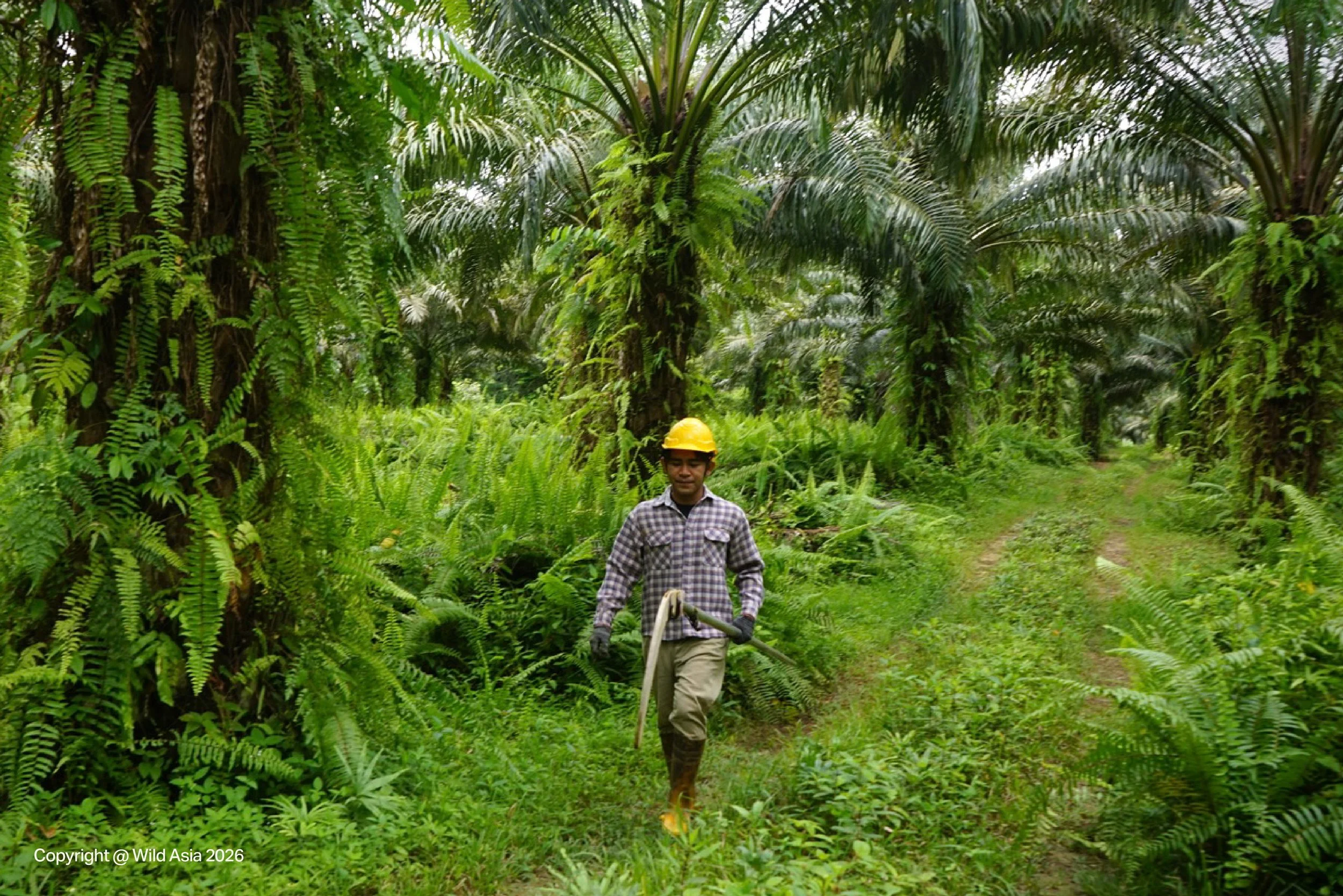
Trenner walks through his family's oil palm plantation in Beluran District, Sabah.
This is the second and final part of our feature on Trenner Ensim, an independent smallholder from Sabah who is transforming his family’s oil palm farm through regenerative methods. With monitoring data indicating healthier oil palms and improved yields reported on his family farm, the young Sabah smallholder shares the challenges of regenerative farming, its impact on his livelihood, and his hopes of inspiring a new generation of farmers.
Data Speaks
To measure the efficacy of BIO practices, Wild Asia partnered with several farmers, including Trenner, to monitor their farms annually. Baseline monitoring was conducted from 2020 to 2024 (the latest available data), using key indicators of tree health, soil health and biodiversity. The indicators for tree health, for example, assess nutrient deficiencies and pest or disease damage. Soil health indicators include the soil infiltration rate, while biodiversity indicators measure earthworm population density.
In Trenner’s case, the nutrient deficiency score was lower in 2024 than in 2021 (see WAGS BIO Report 2024), indicating healthier palms. A tree that lacks essential nutrients such as nitrogen or phosphorus, for example, will result in yellowing leaves, stunted growth and lower yields.
In 2022, minor damage caused by leaf-eating insects and rhinoceros beetles was recorded on the farm. By 2024, there was no visible pest damage. The consistent use of organic soil amendments (bio juice, fish fertiliser and empty fruit bunches) to improve soil health and soil microbes creates a more resilient ecosystem that could indirectly suppress pest populations.*
For Trenner, the most apparent result is in fresh fruit bunch (FFB) yields.
“In the past, my yield could barely reach one tonne per acre. Now, I get one to two tonnes on average,” he says, grinning. “The quality has improved too. The bunches are heavier and denser.”
But he adds, “You have to be patient!” He reckons it takes two to three years to really reap the rewards. Barely 10 years ago, his parents would bring home about MYR1,000 (USD242) per month from FFB sales. Now, Trenner and his brothers rake in a monthly average of MYR7,000 (USD1,700) from the same 14-acre farm.
He recently harvested 4 kg of ginger, which he shared with family and friends, along with a small batch of mas cotek leaves that his father uses to brew medicinal tea. Once he scales up production and stabilises quality, he hopes to sell both crops for extra income.
“I always tell farmers: if you put in the work, you will see the results,” he says. As part of his role at Wild Asia, he runs BIO awareness workshops to help farmers understand the value of regenerative practices and how these skills can build both farm resilience and diversified income.
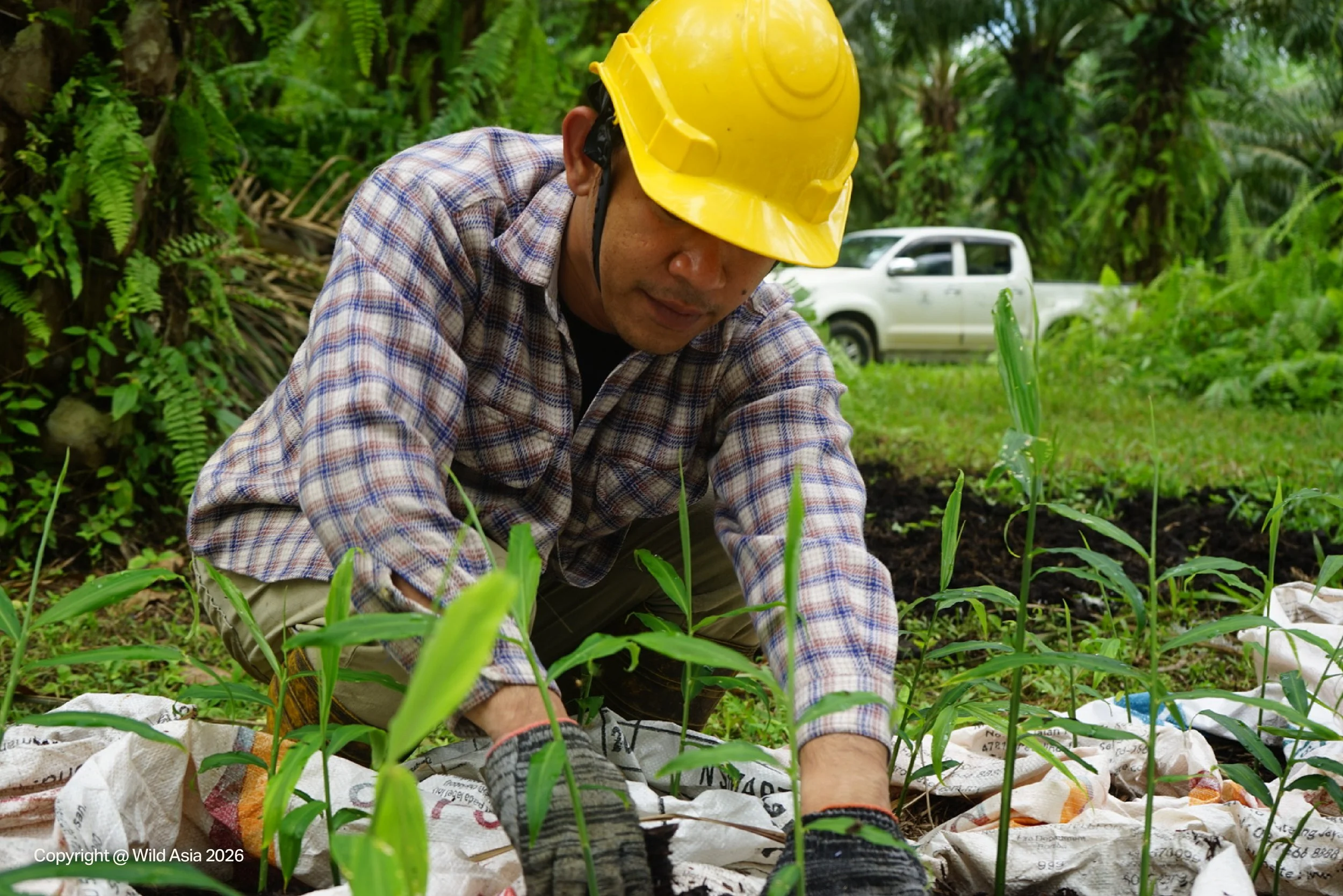
Trenner tends to intercropped plants grown in planting bags at his oil palm plantation.
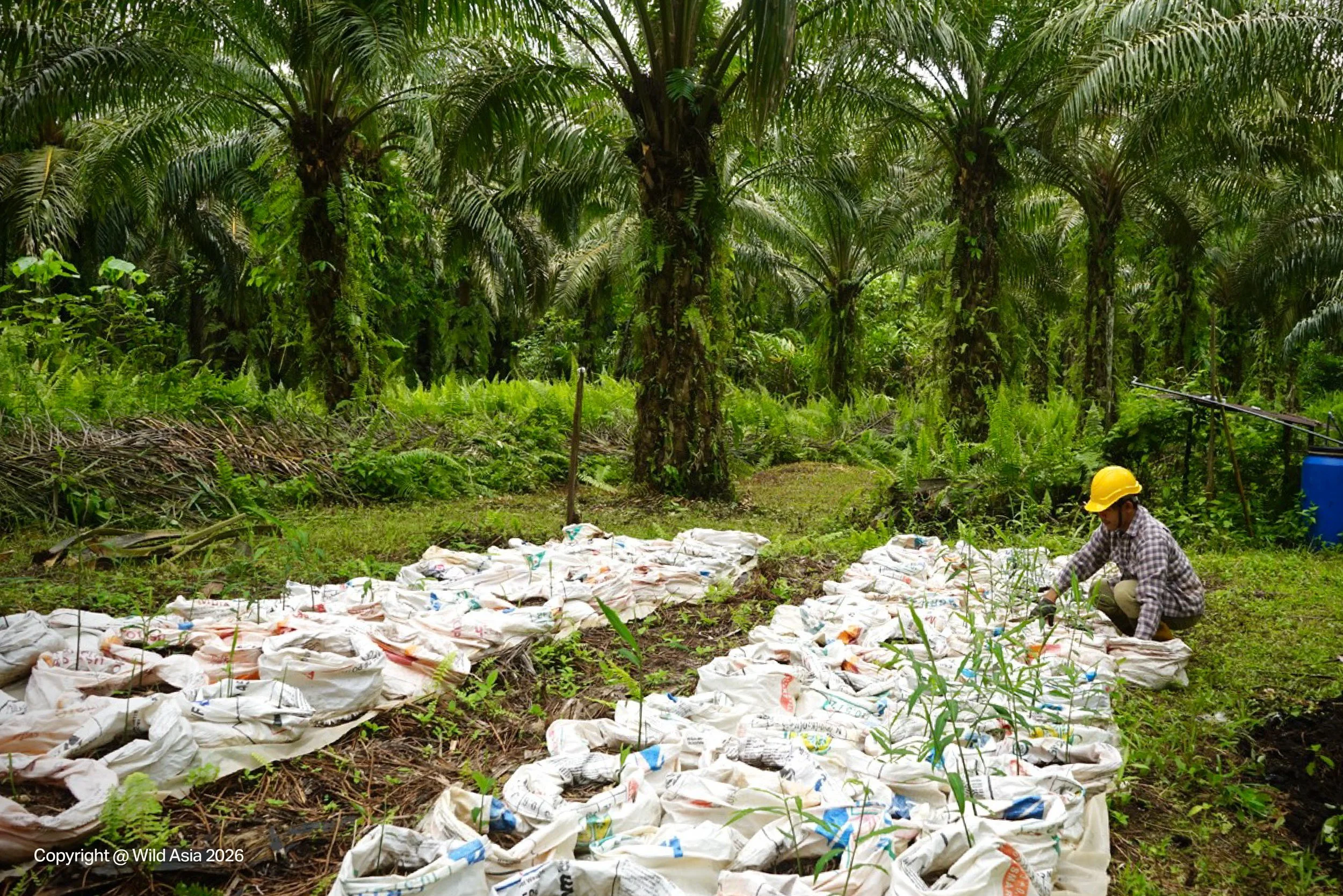
Rows of intercropped plants cultivated in planting bags among oil palms at Trenner's plantation.
Realities on the Ground
But for all Trenner’s passion and drive, regenerative farming is labour-intensive, especially for someone balancing a full-time job.
His daily routine begins at 6 am on the farm, followed by office work at Wild Asia’s Beluran branch or farm visits. When a multi-day work trip takes him deep into the interiors, weekends become his only time to tend to his farm.
“It’s all about time management,” he smiles. “Sometimes I hire farm workers to harvest, but I manage the BIO plot myself. The workers don’t always do the job properly.”
His motivation remains steadfast.
“My parents put their trust in me to be the steward of our family land. I don’t want to let them down,” he explains.
Despite his demanding schedule, he relishes his work at Wild Asia.
“I love the continuous learning and the camaraderie with my colleagues, memang best!” he adds. “I’ve definitely grown more mature, patient and responsible.”
A Millennial Role Model
But it’s not all work and no play for Trenner. He values work-life balance and enjoys playing football, volleyball and badminton with friends. Post-game chatter at the court often turns to stories of farming and Wild Asia’s free workshops, sparking curiosity among his peers.
Young farmers like Trenner are rare in Malaysia, where the average oil palm farmer is 58 years old, according to a Malaysian Palm Oil Board (MPOB) study (Azman Ismail, 2018). In Beluran district—with a population of 101,066—Trenner knows of only 20 smallholders under the age of 40, mainly oil palm and durian farmers.
“Many young people prefer to join the rural exodus. Once they make enough money, they will return to take over their family farms,” says Trenner, who is married with no children.
But for him, oil palm farming is a meaningful, long-term vocation.
“I’ve got so many plans: to save for emergencies, start a livestock farming business and build a house on my farm to be closer to the land,”he shares excitedly.
For Trenner, regenerative agriculture is both a practice and a mission. It is about feeding the soil so it can feed society by producing healthy palm oil that sustains families, enhances biodiversity, lowers carbon emissions and strengthens rural communities.
He exemplifies the future of Malaysian palm oil: young, far-sighted and rooted in regeneration.
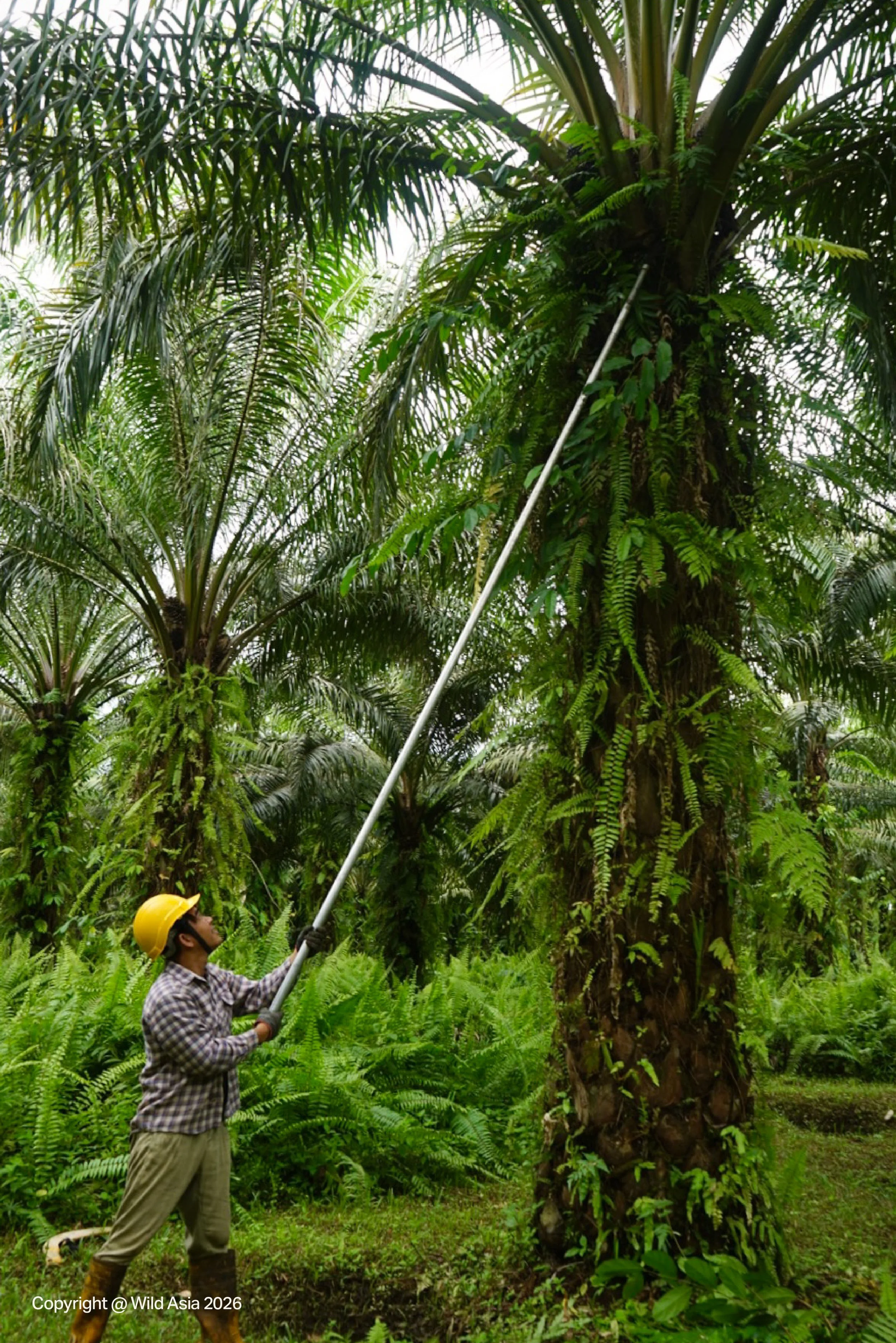
Trenner trims the fronds of a mature oil palm as part of routine plantation maintenance.
Watch this interview to hear directly from Trenner Ensim:
This article is part of Insight Features, a collaboration between Wild Asia and MPOC that explores how Malaysian oil palm producers are integrating nature-positive and regenerative farming practices to support the transition to net zero. Subscribe to PalmPulse for more stories in the series.
*The average time taken for BIO plots to demonstrate positive results depends on several factors, including soil and tree health conditions prior to the adoption of BIO practices, the parameters monitored (earthworm population, soil infiltration and soil compaction), and the intensity and stages of the BIO practices. (See WAGS BIO Report 2024, pages 62–63.)