
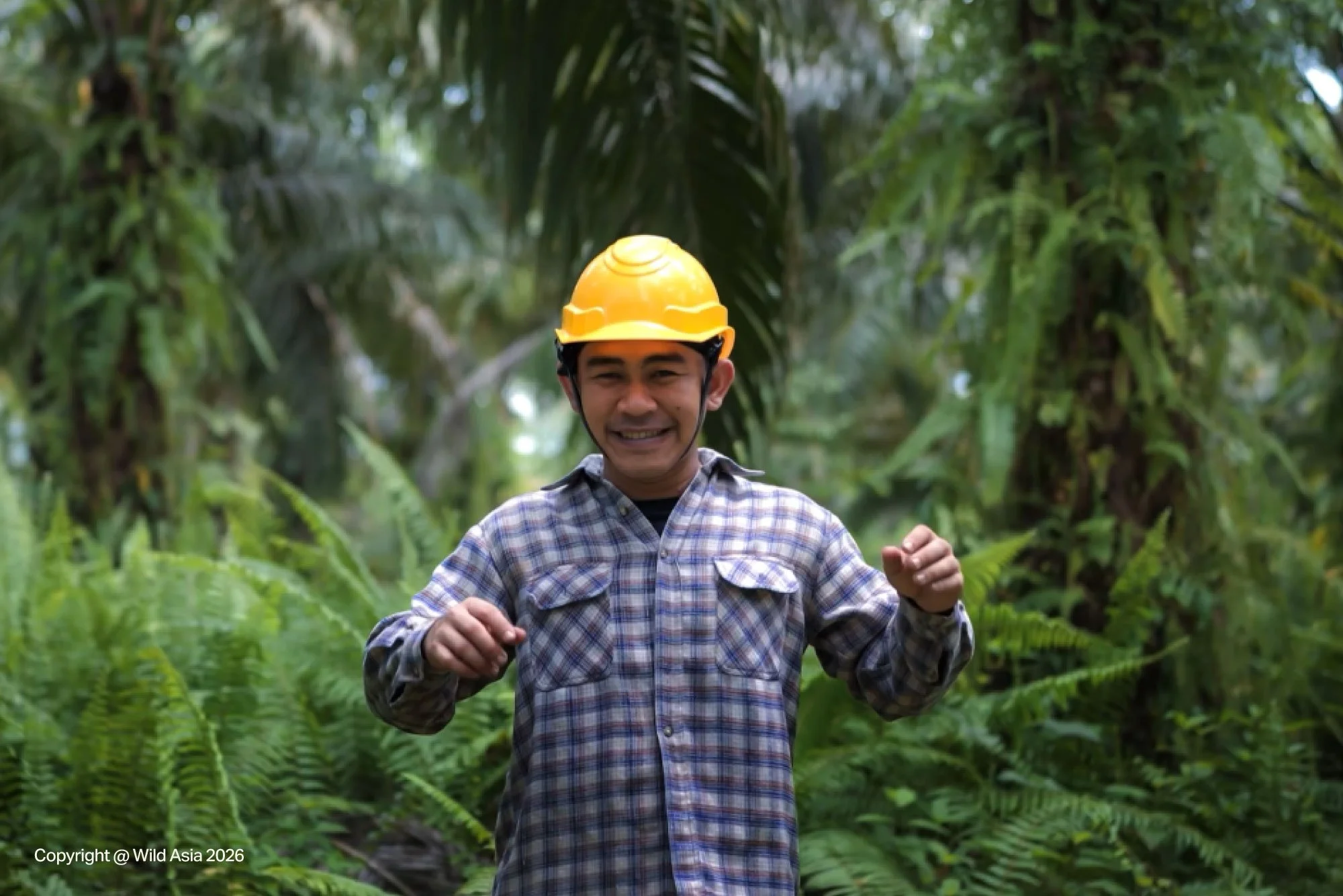
Trenner Ensim smiles amid the oil palms on his plantation in Sabah.
Trenner Ensim, a 30-year-old independent smallholder from Sabah, is transforming his family’s oil palm farm through regenerative methods. As a Wild Asia field agent, he is also helping other farmers make the shift. Part 1
Growing up, oil palm farming was deeply woven into Trenner Ensim’s childhood. After school, while other eight-year-olds ran off to play, Trenner and his siblings headed straight to the family farm.
“My mum would say, ‘If you don’t help out, our family won't have enough money for food and school,’” recalls the second-generation smallholder. Life was tough then. His parents couldn’t afford a car, so getting to school in rural Sabah often meant relying on friends and neighbours for rides.
“My parents worked tirelessly and never gave up,” says Trenner, now 30. “Palm oil became our lifeline. It kept our family afloat and made it possible for me and my siblings to get an education.”
Today, Trenner has taken on far more than his parents’ farming legacy. He found his calling as a model smallholder, a field agent who helps other farmers meet sustainability certification standards and transition to nature-positive practices, and a regenerative agriculture advocate.
Breaking away from conventional farming norms, this millennial farmer embraces regenerative methods, leverages digital tools and prioritises social as well as environmental responsibility. On top of managing his own farm, he juggles a full-time role with Wild Asia, guiding farmers towards sustainability standards and growing a community committed to regenerative farming.
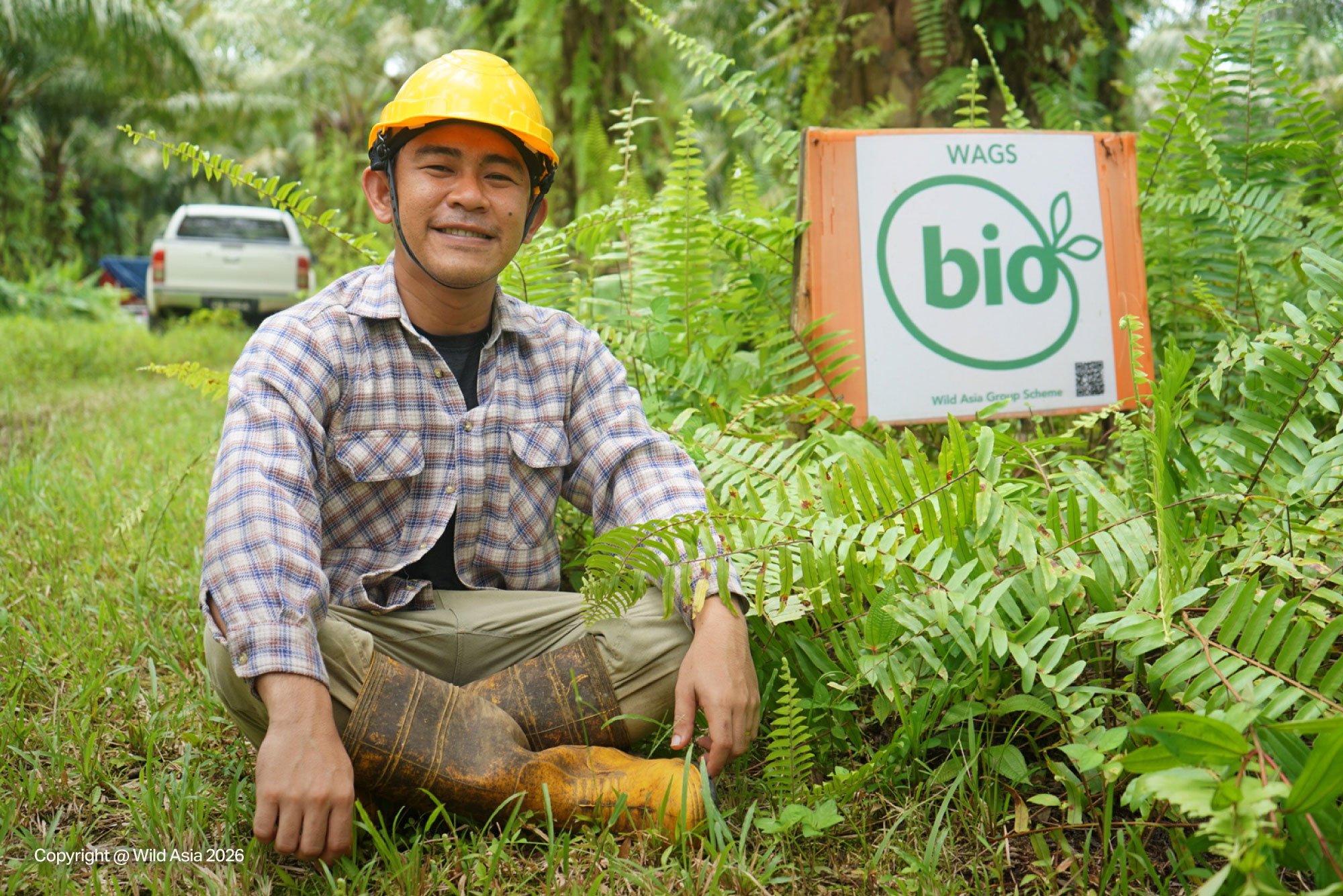
Trenner Ensim at the WAGS BIO plot on his plantation.
The Beginnings
Trenner’s story begins in the idyllic village of Toniting in Sabah’s Beluran District, about 100 km west of Sandakan, the gateway to the world-renowned Kinabatangan biodiversity hotspot. With a population of 487, nearly two-thirds of the families here are involved in oil palm, either working for nearby mills or estates, or running their own smallholdings.
Trenner’s father worked at a logging concession before the industry’s decline in Sabah in the late 1980s. He applied for land from the Lands and Surveys Department and started planting oil palm on a 14-acre (5.7-hectare) plot in 1994, two years before Trenner was born.
In 2013, Toniting made national headlines when 42 local farmers under the Wild Asia Group Scheme (WAGS) became the first independent smallholder group in Malaysia to be certified under the Roundtable on Sustainable Palm Oil (RSPO) Group Certification Standard, and one of only a handful of certified smallholder groups in the world at the time. For smallholders who typically lack the training, funding and technical support available to ‘scheme’ farmers such as those under the Federal Land Development Authority (FELDA), this was groundbreaking.
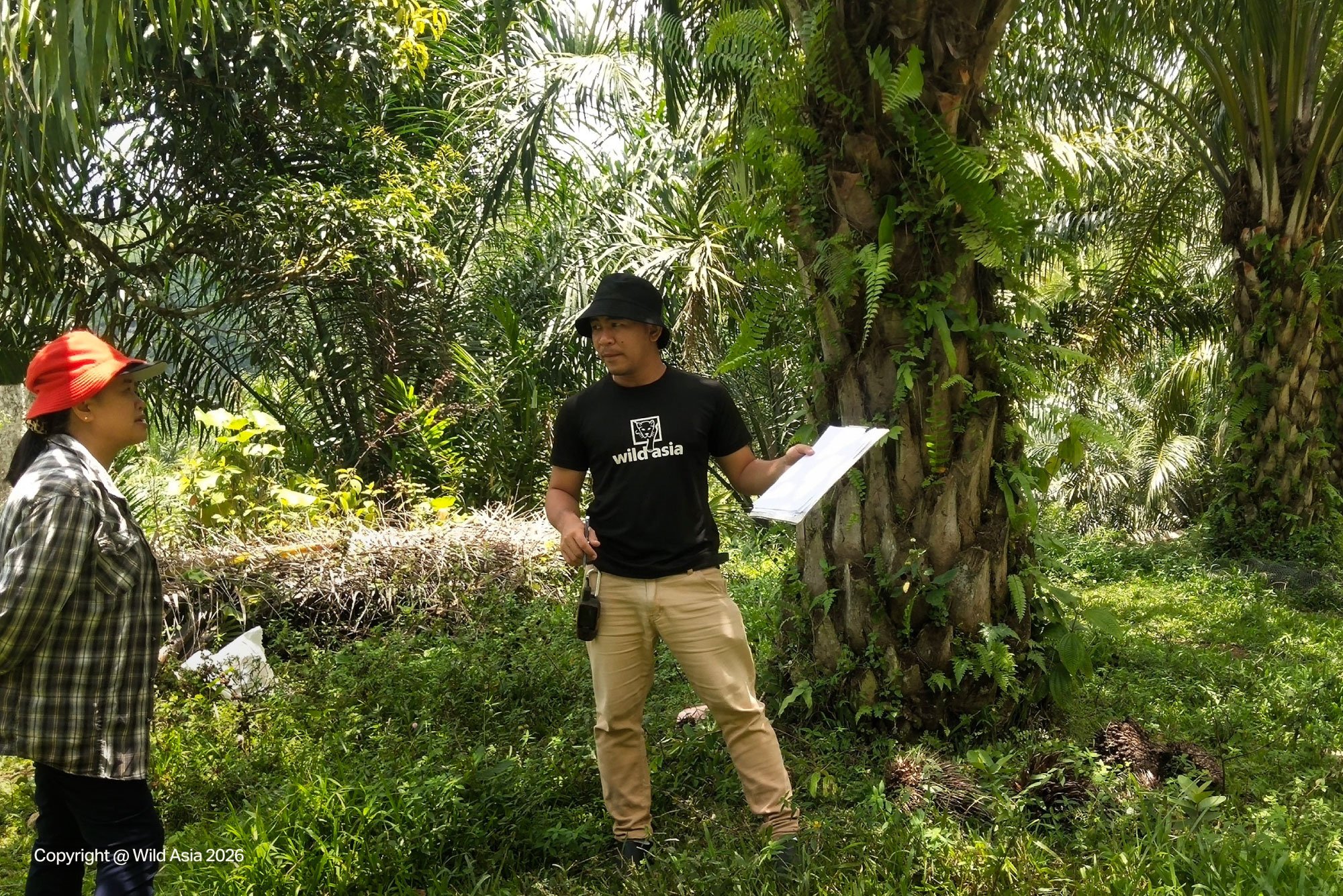
A Wild Asia team member shares information about the organisation's work in supporting sustainable oil palm farming with a neighbouring smallholder.
Under the pilot WAGS project launched in 2012, Wild Asia, a Kuala Lumpur-based social enterprise, provided training and capacity-building support to help farmers meet certification standards.
Trenner’s parents were part of this pioneering group of certified farmers. Through WAGS, they learned better farm management practices, from proper frond stacking to prudent pesticide use to record-keeping and the application of biomass, such as empty fruit bunches (EFB) and decanter cake, to enrich soils.
After completing Sixth Form (pre-university) in 2015, Trenner made a pivotal decision. Instead of pursuing tertiary education, he became a full-time farmer.
“My dad’s health was declining, so it was time to step up. And I didn’t want university expenses to become a financial burden for my parents,” says Trenner, a member of the Kadazan-Dusun community, Sabah’s largest indigenous ethnic group.
In 2016, a field agent position became available at Wild Asia, and Trenner seized the opportunity. As part of the WAGS Member Support team, he recruits new WAGS farmers, trains them and collects data.
“This job is ideal because I can stay in Toniting and continue working on my family farm,” says Trenner. “I can connect easily with the locals because I’m part of the community. I speak the local lingo and I’m also a hands-on farmer.”
Trenner’s parents received their Malaysian Sustainable Palm Oil (MSPO) certification in 2018. Their experience with RSPO made the MSPO certification process a lot less intimidating.
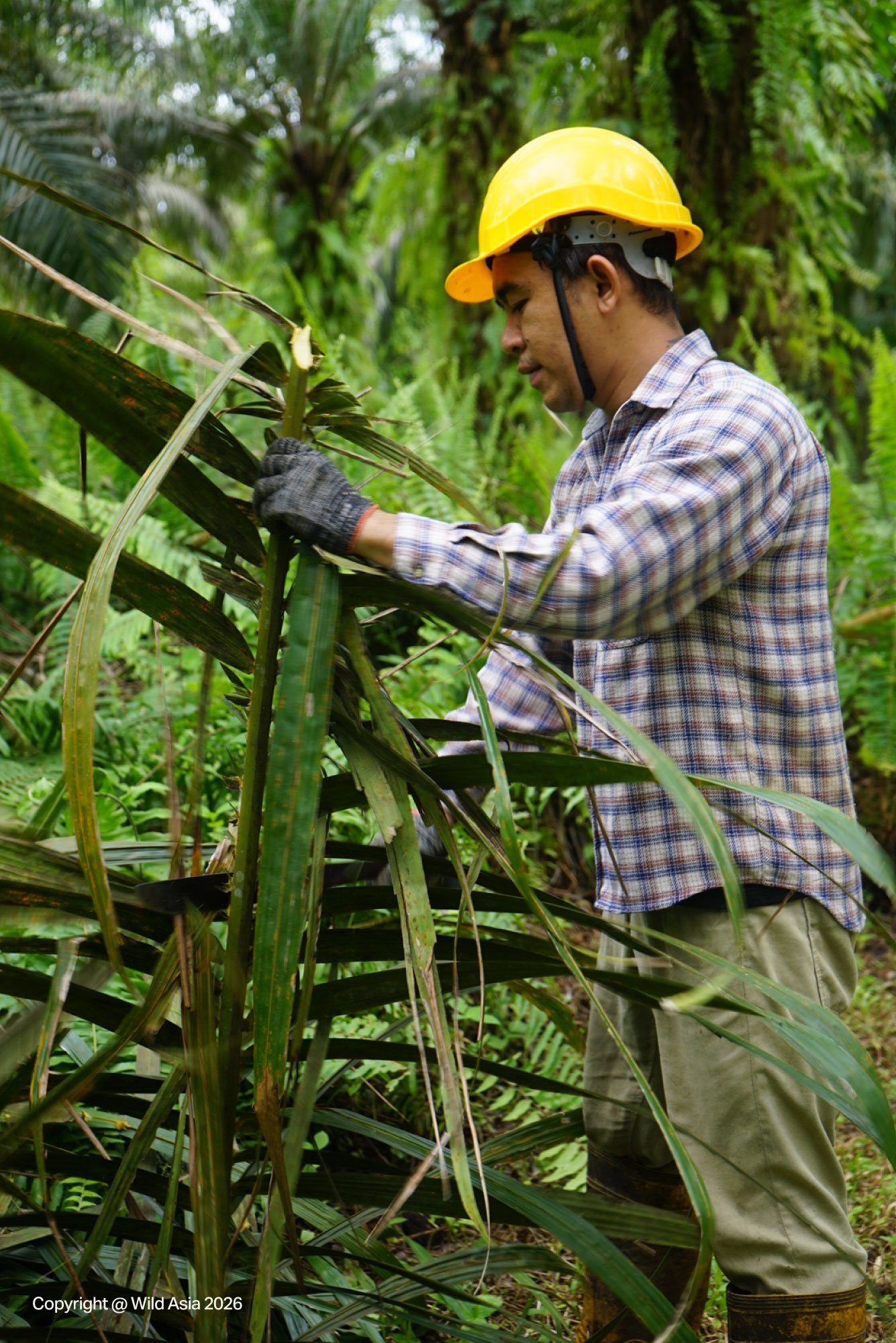
Trenner gathers trimmed oil palm fronds during plantation maintenance.
The Path to Healthy, Living Soils
When Wild Asia launched the WAGS BIO project in 2019, Trenner was one of the first farmers to volunteer his family farm for trial plots. WAGS BIO is a production system designed to help farmers transition from ‘conventional’ to regenerative agriculture, with a focus on improving soil health and soil organic matter while reducing reliance on chemical inputs.
Structured in incremental stages, WAGS BIO is open to all WAGS members who are certified sustainable. Trenner set aside one acre for the BIO plot.
Through practical workshops, he and fellow BIO farmers learned to make their own compost, liquid enzymes and fish fertiliser using kitchen and farm waste. They explored multicropping, agroforestry, biochar application and integrated pest management—methods that help restore soil health and biodiversity.
The timing couldn’t have been better. Palm oil prices had hit a multi-year low in late 2018.
“We had to find ways to cut costs. Making compost and fertilisers ourselves helped us weather the tough period,” says Trenner. “Also, our soil had become compacted after years of conventional farming, and yields were low. It was time to heal the soil.”
Under the BIO programme, Wild Asia also distributes free ginger and medicinal plant mas cotek (Ficus deltoidea) seedlings to help farmers diversify their income. Trenner planted 200 ginger and mas cotek seedlings, grown in polybags, between rows of palm trees.
Since the start of the BIO trials, Trenner has used a grass cutter to control weeds and made fruit enzymes and fish fertiliser from kitchen scraps. In 2025, he started making biochar from palm frond midribs and garden waste, using a Kon-Tiki biochar kiln* loaned by Wild Asia. In August 2025, he applied the first batch of biochar on his farm. A form of charcoal produced in low-oxygen environments, biochar improves water and nutrient retention, reduces soil acidity, supports soil microbial activity and can improve crop yields.
“From experience, BIO practices need about seven months or more to show visible results, such as healthier soil with more worms, greener palms and perhaps a slight increase in yield,” Trenner admits. “But my farming costs dropped by 60% almost immediately because I no longer need to buy any chemical inputs.”
When his parents divided the family land into three separate plots for Trenner and his two brothers in 2022, he expanded his BIO plot to almost five acres.
In Part 2 of Trenner Ensim’s story, discover how data reveals the impact of regenerative farming on his yields, farm resilience and livelihood—and how he is inspiring a new generation of smallholders. Read it in the December 2026 edition of Palm Pulse.
Watch this interview to hear directly from Trenner Ensim:
This article is part of Insight Features, a collaboration between Wild Asia and MPOC that explores how Malaysian oil palm producers are integrating nature-positive and regenerative farming practices to support the transition to net zero. Subscribe to Palm Pulse for more stories in the series.
*A Kon-Tiki kiln is a low-tech biochar production system, typically consisting of a cone-shaped steel structure, that uses the ‘flame curtain’ pyrolysis method to produce high-quality biochar with low emissions. Unlike commercial biochar equipment, the Kon-Tiki kiln is a low-cost option.