
Palm kernel cake (PKC) has long been regarded primarily as a feed for cattle and sheep, yet in China it is steadily finding a wider role.Imports have grown from about 0.73 million tonnes in 2020 to 1.12 million tonnes in 2025. In the first eight months of 2026 alone, imports reached 1.09 million tonnes, approaching the full-year 2025 total. Behind these figures are two developments worth following: a policy push to reduce China’s reliance on soybean meal, and a shift in market suppliers, with Malaysia’s share rising from 31% in 2020 to 56% in January to August 2026. This article examines what is driving China’s demand for PKC, why Malaysia has moved ahead of Indonesia despite similar import prices, and what Malaysian suppliers can do to turn recent gains into a lasting market position.
Ruminant Feed Is Growing More Slowly Than Total Output
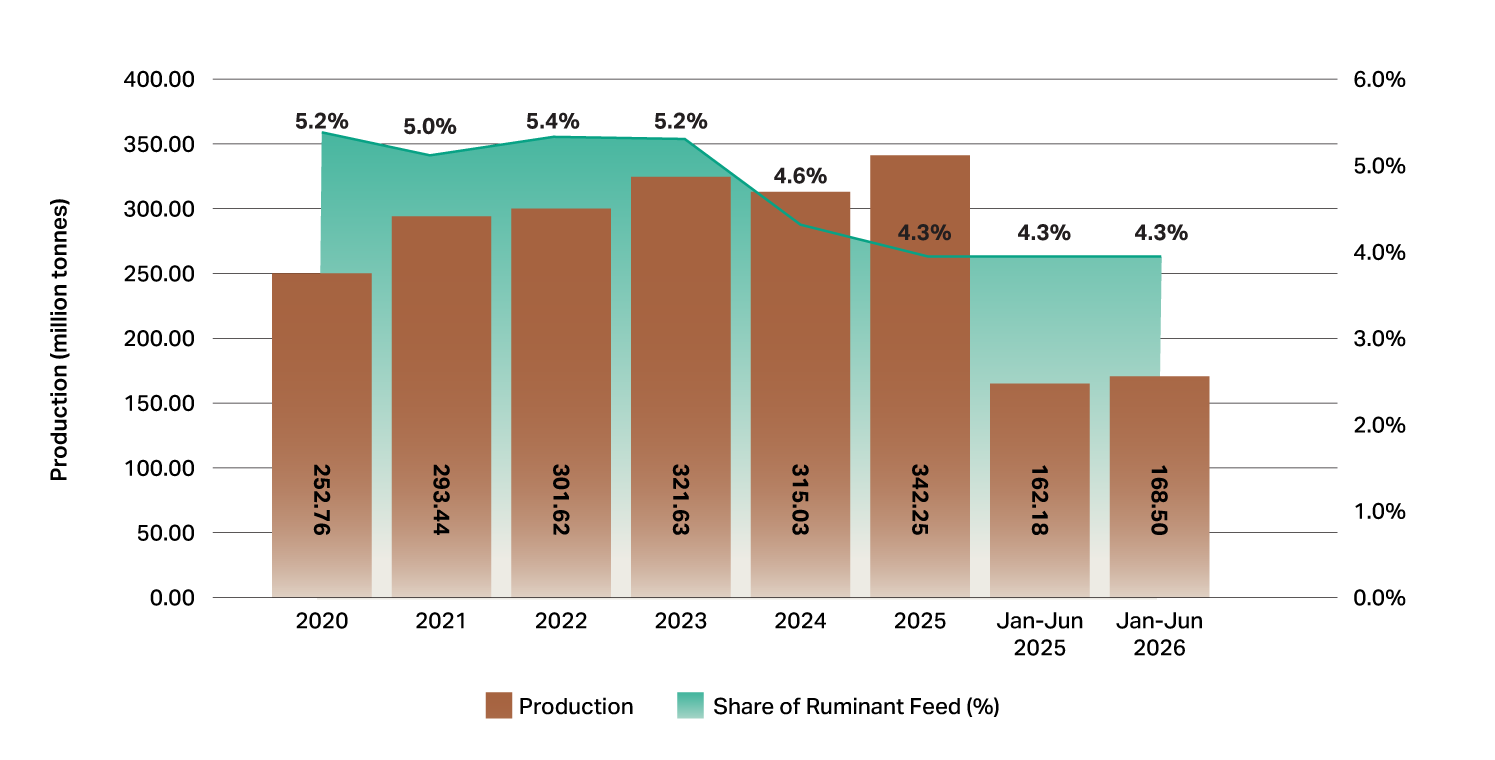
Figure 1: Animal feed production in China (China Feed Industry Association, 2026).
China’s Growing Feed Industry and Rising PKC Demand
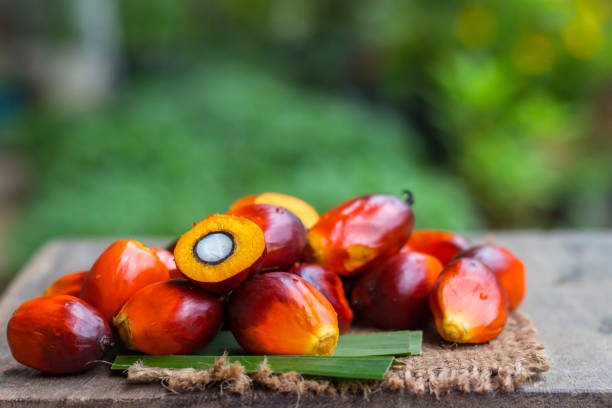
Palm kernel cake is a by-product of the mechanical pressing or solvent extraction of palm kernel oil from palm kernels. Compared with soybean meal, it is generally higher in fibre and has a less favourable protein and amino acid profile. Its strongest nutritional fit is therefore in rations for dairy cattle, beef cattle, sheep and other ruminants. It may also be incorporated at controlled levels into swine and poultry feed, depending on fibre content, digestibility, shell content and overall formulation requirements.
China’s feed industry has expanded steadily, with output rising from 252.76 million tonnes in 2020 to 342.25 million tonnes in 2025, representing a compound annual growth rate (CAGR) of 6.2%. Ruminant feed, where PKC is most naturally suited, accounts for only a small share of this output, at around 4% to 5%. Its share also declined from 5.2% in 2020 to 4.3% in 2025 (Figure 1). PKC’s import growth, therefore, cannot be explained solely by expansion in the ruminant feed sector.
The year 2024 was one of adjustment. Total feed output fell by 2.1%, while ruminant feed production declined by around 13%, marking its first contraction since 2017. This helped moderate PKC imports following the exceptionally strong volumes recorded in 2023 (Figure 2). Nevertheless, imports of 936,336 tonnes in 2024 remained about 27% above the 2020 level.
Several factors contributed to this adjustment. Weaker livestock margins and unfavourable price movements encouraged herd reductions, with cattle and sheep inventories falling by 4.4% and 6.8% year-on-year, respectively. Many farmers also turned to self-mixed feed to reduce cost, substituting purchased feed with lower-cost by-products such as distillers’ grains and straw. The adjustment was broad-based across ruminant segments, with output of dairy cattle feed declining by 13.1%, sheep feed by 11.4% and beef cattle feed by 9.2%.
The 2024 dip appears to have been a temporary pause rather than a change of direction. Imports fell by 36.5% from their 2023 peak, before recovering by 19.2% in 2025 to 1.12 million tonnes. In January to August 2026, imports reached 1.09 million tonnes, about 78% higher than in the corresponding period a year earlier.
Over the longer term, PKC imports grew at a CAGR of 8.7% between 2020 and 2025, compared with only 2.3% for ruminant feed production. This divergence suggests that PKC demand may be influenced by factors beyond the growth of the ruminant feed sector.
China’s PKC Imports Regain Momentum After the 2023 Peak
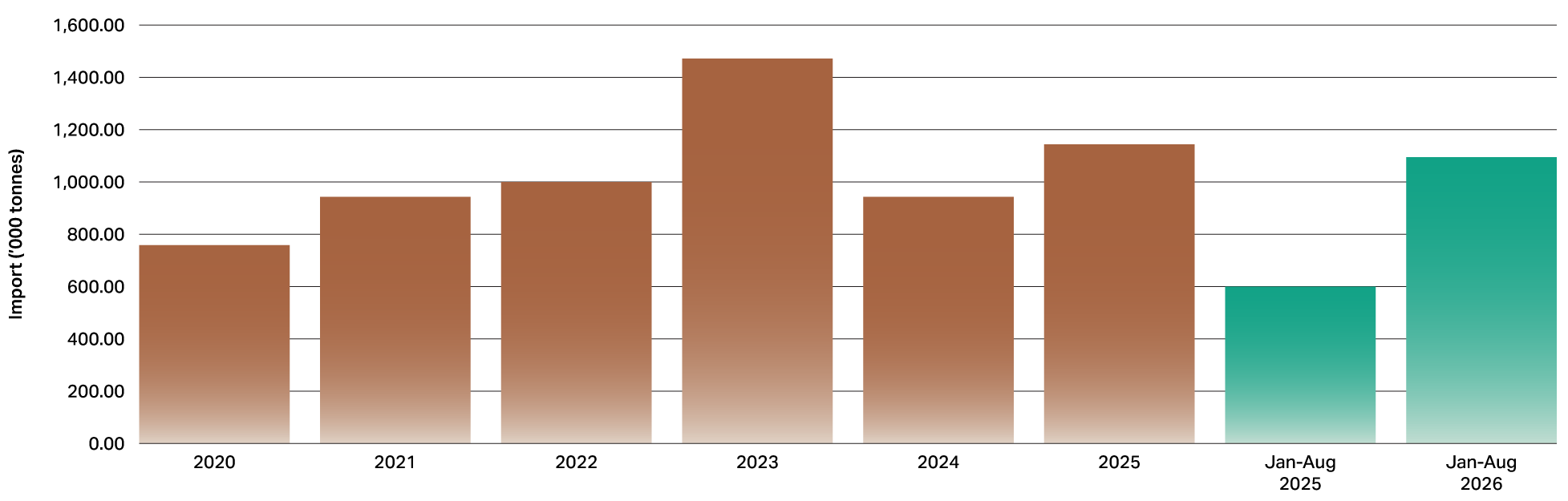
Figure 2: Imports of PKC in China (Chinese Customs, 2026).
Policy Shifts Drive Demand for Alternative Feed Ingredients
China’s growing use of PKC reflects broader changes in its feed industry, driven by food security concerns, policies to reduce soybean meal use and greater adoption of alternative feed ingredients. Since 2020, the government has progressively promoted lower-protein diets, amino-acid balancing, alternative oilseed meals and processing by-products. These efforts were reinforced by the 2021 Food Conservation Action Plan and the 2023–2025 Three-Year Action Plan, which targeted a reduction in soybean meal’s share of feed ingredients to below 13% by 2025. In 2025, the policy framework was extended to 2030, with targets for further reductions in soybean meal use and greater utilisation of non-grain feed resources, including PKC.
Malaysia’s share of China’s PKC imports rose to 56.4% in January–August 2026, strengthening its position ahead of Indonesia in one of the world’s key feed markets.Malaysia Is Gaining Share in China's PKC Market
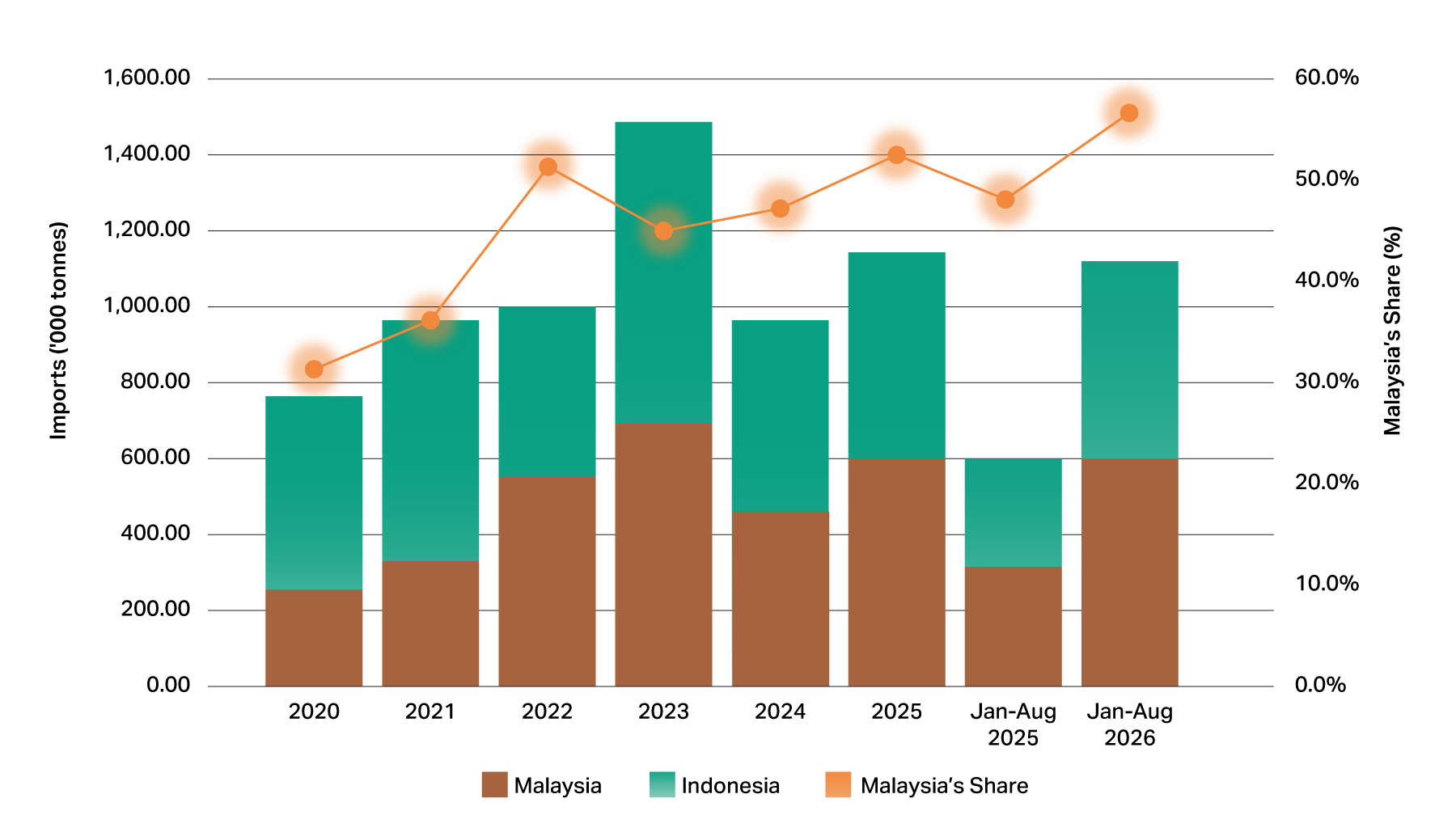
Figure 3: Imports of PKC in China by country of origin (Chinese Customs, 2026).
Malaysia Gains Ground in China’s PKC Market
The shift is most visible in the changing composition of China’s PKC imports. In 2020, Indonesia supplied about 68.6% of China’s imports, compared with 31.4% from Malaysia. Malaysia briefly took the lead in 2022 before moving ahead again in 2025, when it accounted for 52.9% of the total. In January to August 2026, Malaysia’s share reached 56.4%, up from 47.5% in the corresponding period of 2025, while Indonesia’s share fell to just over 43% (Figure 3). Indonesian shipments also increased, rising by 47% year-on-year in January to August 2026. However, Malaysian shipments grew much faster, surging by 111%, to 613,870 tonnes.
Price does not appear to be the deciding factor. Between 2020 and January to August 2026, Malaysian PKC prices averaged between USD5.24 per tonne below and USD9.91 per tonne above the Indonesian prices (Table 1). In five of the eight periods examined, the price difference was within approximately USD2 per tonne. Malaysia’s market share rose most sharply in 2022, when its price premium over Indonesian PKC was at its widest.
Supply conditions in Indonesia appear to be a more significant factor. Domestic PKC use in Indonesia nearly doubled between 2020 and 2025, rising from 577,100 to 1.10 million tonnes, or from 10.3% to 17.5% of production. Indonesian exports nevertheless recovered to 5.15 million tonnes in 2025, suggesting that the shift is one of emphasis rather than outright scarcity. As more PKC is absorbed domestically, Indonesia may have less flexibility to serve all export markets simultaneously, creating opportunities for Malaysia to expand its presence.
Indonesia’s changing export restrictions on palm oil and selected downstream products since 2022 have also introduced a degree of uncertainty. Although these measures primarily affected palm oil, possible spillover effects, including customs delays and higher shipping costs, may have encouraged Chinese buyers to diversify their PKC sourcing toward Malaysia.
Table 1: Average unit import value of PKC in China (Chinese Customs, 2026).
Beyond Price: Building a Lasting Market Position
China’s policy direction is likely to remain supportive of demand for alternative feed ingredients. Efforts to reduce soybean meal use, expand the utilisation of non-grain feed resources and promote precision nutrition are expected to continue through 2030. PKC fits this agenda as a relatively affordable ingredient available in substantial volumes and supported by established trade channels into China. It is therefore likely to remain part of China’s diversified feed ingredient mix.
Import volumes are unlikely to follow a straight upward trajectory, however. Year-on-year movements will depend on the pace of recovery in China’s cattle, sheep and dairy sectors; PKC’s delivered price relative to soybean meal, rapeseed meal, sunflower meal, wheat bran and corn by-products; and the ability of feed companies to manage a high-fibre ingredient through testing, enzyme supplementation, fermentation and precision formulation. Export availability in Malaysia and Indonesia, as well as demand from other importing markets, will also influence trade flows.
For Malaysian suppliers, the opportunity lies in consolidating recent gains rather than competing on price alone. With average Malaysian and Indonesian import values already very close, supply-chain reliability and verifiable product quality are likely to carry greater weight in determining future market share. Standardised products, consistent batch quality, transparent nutritional specifications and dependable shipment schedules will help feed companies formulate with confidence and strengthen the position of Malaysian PKC in China’s feed market.
China’s shift towards alternative feed ingredients is driving PKC demand, with imports reaching 1.09 million tonnes in January–August 2026, nearly matching the full-year 2025 total.