
India’s Personal Care Sector: A Growing Opportunity for Malaysian Palm-Based Oleochemicals

India’s basic oleochemicals market is on course to nearly double from 2.2 million tonnes in 2025 to 4.1 million tonnes by 2034, with cosmetics and personal care representing its largest application. According to a recent market study commissioned by the Malaysian Palm Oil Council (MPOC), the opportunity for Malaysian suppliers extends beyond trade towards local manufacturing and deeper integration into India’s supply chains.India is rapidly becoming one of the world’s more significant oleochemicals markets, with much of that growth concentrated downstream in two distinct but equally palm-dependent industries: personal care and household products. This is the first of a two-part series drawn from two new market studies—this article examines personal care, while the next focuses on household products, including surfactants, adhesives and architectural coatings.
Both segments draw from the same foundation. According to the study, India’s overall basic oleochemicals market—covering fatty acids, fatty alcohols, methyl esters and glycerine across all end-use applications—reached an estimated 2.20 million tonnes in 2025 and is forecast to expand to 4.07 million tonnes by 2034, representing a compound annual growth rate (CAGR) of 7.09%. Cosmetics and personal care is the largest single application within that total, accounting for an estimated 713,330 tonnes in 2025 and projected to reach 1.24 million tonnes by 2034, growing at 6.38% annually and remaining the largest application through 2034.
India’s Basic Oleochemicals Market by End-Use Application, 2025 Versus 2034
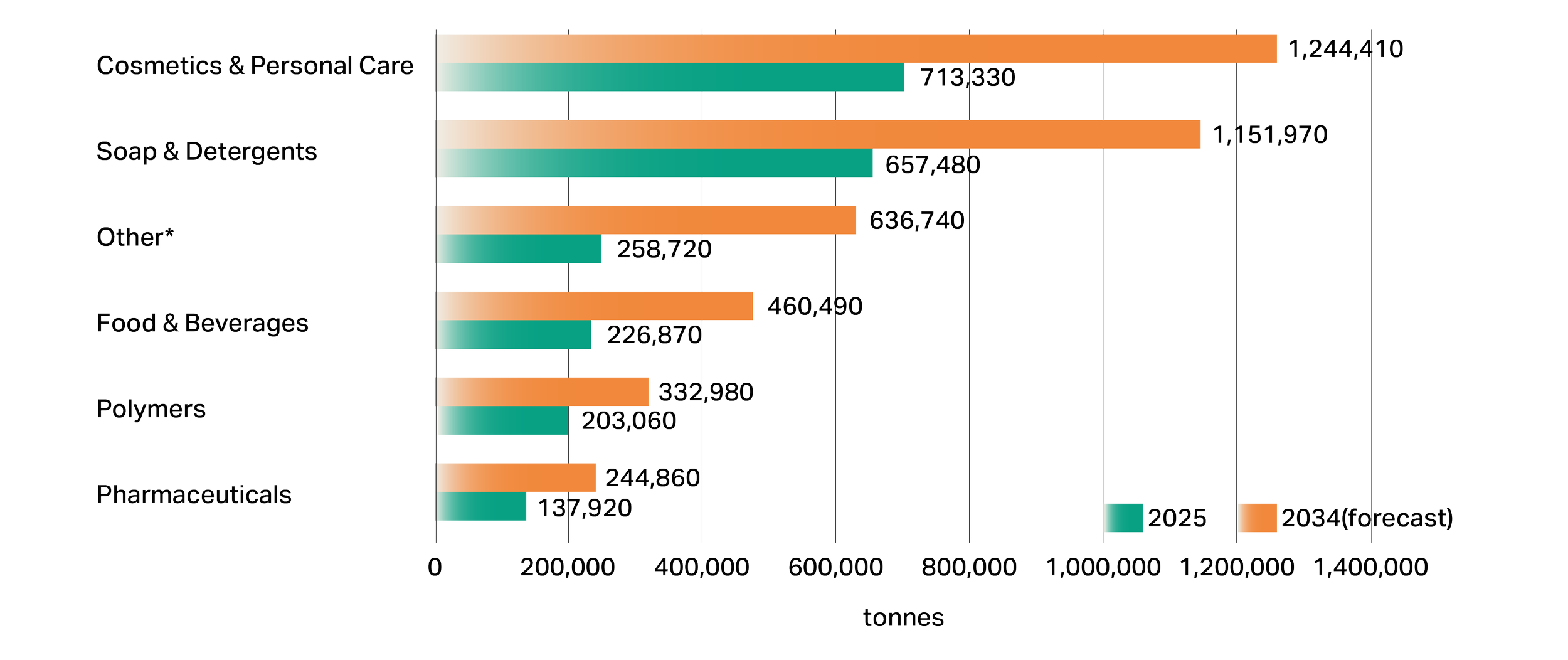
Figure 1: India’s basic oleochemicals market by end-use application, 2025 versus 2034, in tonnes
(Mordor Intelligence, Custom Report for MPOC, 2025).
India is unable to meet this demand through domestic production alone and relies heavily on imports. In 2024, the country’s oleochemical imports surpassed 950,000 tonnes, with Indonesia and Malaysia the primary suppliers of stearic acid, glycerol, oleic acid and fatty acids, while China and Malaysia dominate the supply of palmitic acid. That import dependency, and what it means for Malaysian exporters, is the thread running through this series.
A Large and Expanding Personal Care Market
Narrowing specifically to palm-based oleochemicals used in personal care—including skincare, haircare, oral care and other personal care products—the market was valued at an estimated USD477.16 million (approximately 539,000 tonnes) in 2025 and is forecast to reach USD795.55 million (approximately 881,000 tonnes) by 2034, representing a CAGR of roughly 5.6–5.8%, depending on whether volume or value is measured.
Skincare is the largest category, accounting for close to half of the volume share in 2024 and growing at 6.10% annually to 2034—the fastest of the four product segments. Haircare is the second-largest and second-fastest growing segment. Oral care and other personal care products, including colour cosmetics and hand sanitisers, are smaller and growing more slowly, though the report notes that hand-sanitiser demand has remained supported by the lasting effects of India’s public sanitation campaigns, while changing consumer preferences are reshaping colour cosmetics towards more sustainable formulations.
India’s Palm-Based Personal Care Oleochemicals Market by Product, 2025 Versus 2034
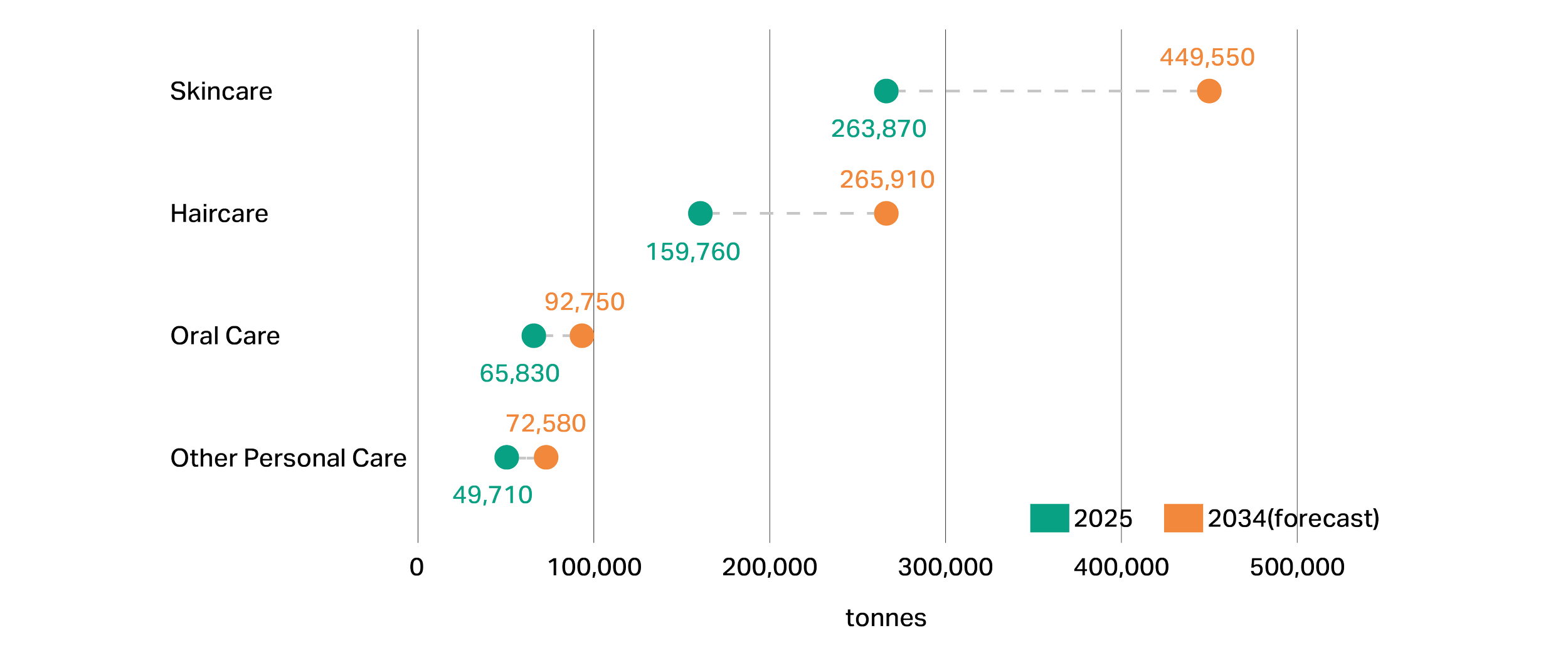
Figure 2: India’s palm-based personal care oleochemicals market by product, 2025 versus 2034, in tonnes
(Mordor Intelligence, Custom Report for MPOC, 2025).
Underpinning these product categories are the derivatives that carry palm’s functionality into finished products. Fatty acids are the largest derivative group by volume, with lauric, myristic, stearic and palmitic acids providing cleansing, antimicrobial and moisturising properties in products ranging from toothpaste to shampoo. Fatty alcohols including cetyl, stearyl and cetearyl alcohols, are the fastest-growing derivative group, expanding at 6.34% annually and valued for the texture and stability they bring to emulsions and conditioners. Glycerine and glyceryl esters, together with a smaller group of esters, complete the picture, supporting products such as serums, sunscreens and moisturisers where controlled emulsification is essential.
India’s Palm-Based Personal Care Oleochemicals Market by Derivative, 2025 Versus 2034
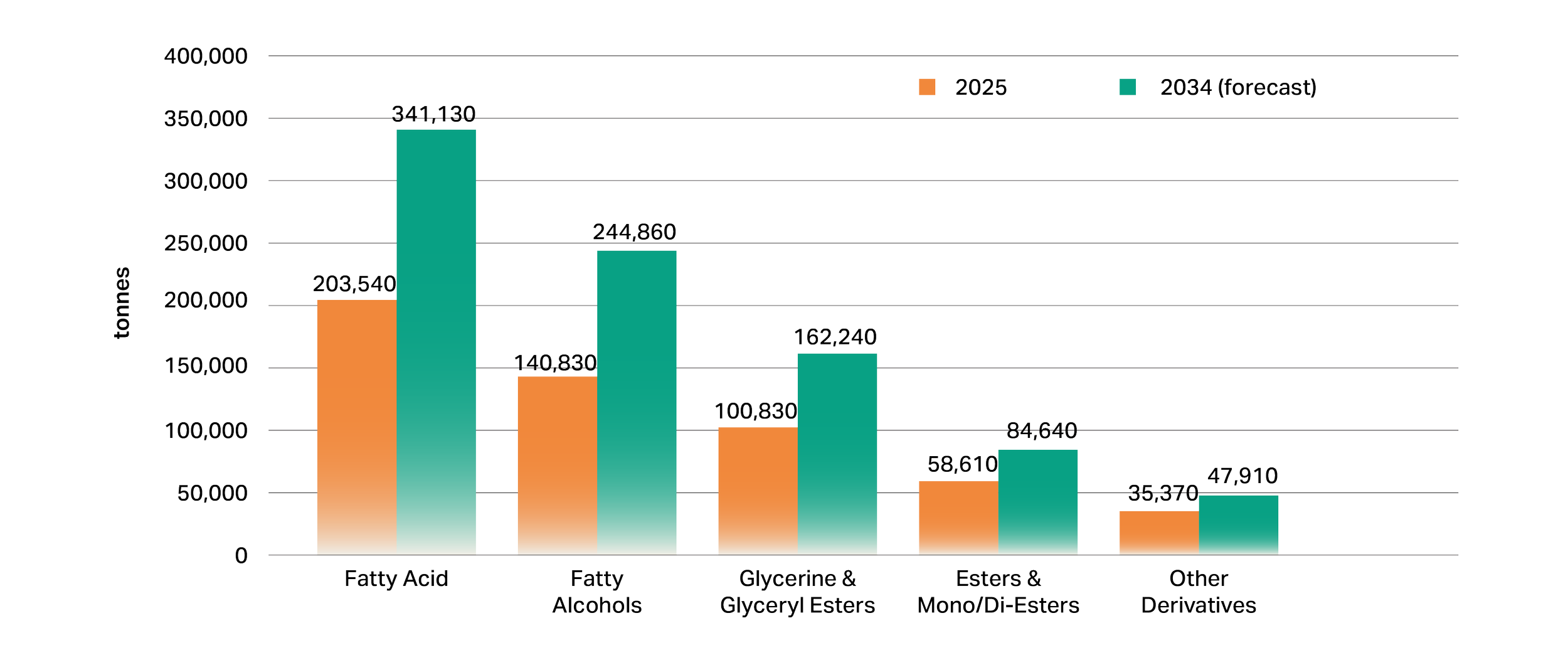
Figure 3: India’s palm-based personal care oleochemicals market by derivative, 2025 versus 2034, in tonnes
(Mordor Intelligence, Custom Report for MPOC, 2025).
What is Driving Demand
Two forces stand out in the study. The first is the shift towards natural and biodegradable ingredients. Palm-derived intermediates such as methyl ester sulfonate and alkyl polyglycosides are reported to achieve more than 90% biodegradation within 28 days and are increasingly being used in place of traditional SLS/SLES surfactants. Products marketed on the basis of certified sustainable palm oil content are also reported to command a price premium.
The second is sustainability as a marketing proposition in its own right. Several major personal care companies operating in India have developed product lines or campaigns around certified sustainable palm oil content, citing meaningfully lower greenhouse gas emissions for palm-derived inputs compared with petrochemical equivalents.
Several major personal care companies operating in India have developed product lines or campaigns around certified sustainable palm oil content, citing meaningfully lower greenhouse gas emissions for palm-derived inputs compared with petrochemical equivalents.Who is Supplying India’s Personal Care Sector
India’s personal care oleochemicals supply is relatively concentrated. AWL Agri Business Limited (formerly Adani Wilmar) leads the market, operating one of India’s largest single-location oleochemical facilities at Mundra, with a production of roughly 400 tonnes a day. 3F Industries and VVF Limited follow, with VVF, a four-decade exporter, counting Unilever, BASF, Colgate and Shell among its global customers. Godrej Industries, Patanjali Foods, Fairchem Organics and Jocil round out the leading tier. By production capacity, the top five players collectively control roughly 70–72% of India’s basic oleochemicals capacity.
Several Malaysia-linked producers are already established suppliers to some of India’s largest personal care companies, underscoring how existing trade relationships run deeper than headline trade figures alone would suggest. The market is also actively consolidating: Adani Wilmar took a 67% stake in a specialty chemicals producer in mid-2024, Godrej is expanding its fatty alcohol and glycerine capacity by 35,000 and 24,000 tonnes a year respectively, while Patanjali Foods moved to acquire Patanjali Ayurved’s personal care business for INR1,100 crore (around USD132 million). These developments point to a market where scale and integration are being actively pursued.
Where Malaysia’s Opportunity Lies
India will remain a net importer of palm oil, sourcing close to 90% of its requirements mainly from Indonesia and Malaysia. One development already reshaping regional palm oil trade dynamics is Indonesia’s implementation of its mandatory B50 biodiesel programme on 1 July 2026. The policy is expected to absorb around 17 million tonnes of palm oil annually for domestic biodiesel blending, approximately 3 million tonnes more than under the previous B40 programme and equivalent to roughly 35% of Indonesia’s total palm oil production. After accounting for domestic food consumption, Indonesia’s exportable surplus could decline to around 22 million tonnes annually, compared with its historical export range of 24 to 28 million tonnes. This is expected to tighten global palm oil availability and intensify competition among importing countries for export volumes.
Against this backdrop, Malaysian suppliers are well positioned to strengthen their role as a reliable source of palm oil and palm-based oleochemicals for Indian buyers. India’s recent reduction in customs duties on crude palm oil is also expected to support import demand and enhance the competitiveness of Malaysian shipments over the medium term. At the same time, India’s reliance on imported oleochemicals remains significant. Across the six major categories tracked in the study, India imported close to 864,000 tonnes and exported around 312,000 tonnes in 2024, highlighting the country’s continued dependence on overseas supply for a substantial portion of its oleochemical requirements.
India’s Oleochemicals Imports Versus Exports by Category in 2024
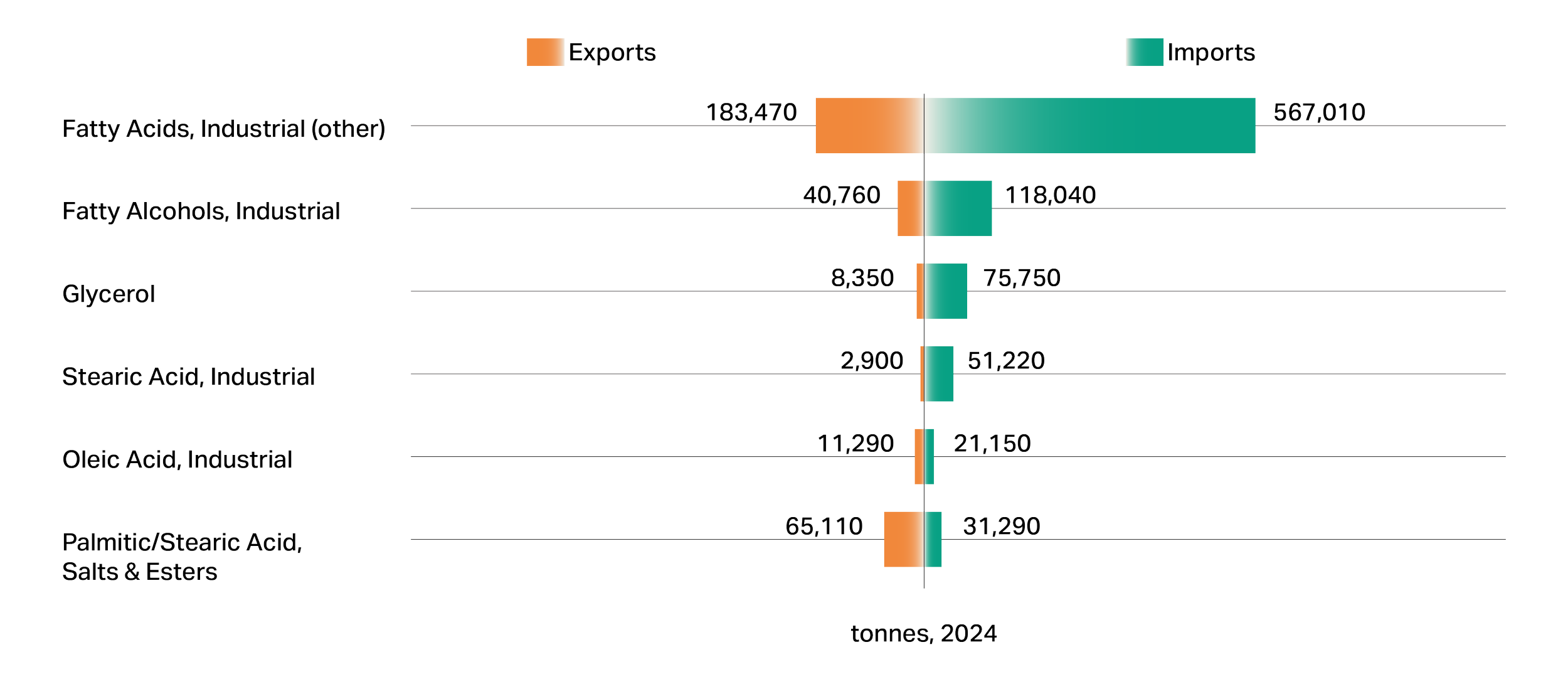
Figure 4: India’s oleochemicals imports versus exports by category in 2024, in tonnes
(Mordor Intelligence, Custom Report for MPOC, 2025).
The study’s central recommendation, however, looks beyond trade volumes. It suggests that Malaysian producers competing purely as raw material exporters may find this position harder to sustain as India builds its own value-added manufacturing capabilities. The larger opportunity it identifies is manufacturing-led: localising production, capturing import substitution opportunities and integrating directly into India’s FMCG and pharmaceutical supply chains, where Indian producers are already securing internationally recognised sustainability credentials that multinational buyersincreasingly expect.
For an industry that has long approached India primarily as a destination for shipments, this represents a notable shift in framing—and it sets up the second part of this series. Part 2 turns to India’s household products market: surfactants, adhesives and architectural coatings, where regulatory pressure on VOC emissions and a wave of capital-intensive M&A are reshaping demand for palm-based ingredients in a different but equally significant way.
If you would like the full findings behind this article, including detailed segment data and company-level insights, get in touch with our team.