
Between Craft and Cultivation: Samri’s Next Chapter
This article is part of the Farmer Profile Series—Mah Meri Stories of Land, Livelihood, and Legacy, a collaboration between Wild Asia and MPOC that highlights how Mah Meri oil palm smallholders navigate modern livelihoods while preserving identity, knowledge, and cultural heritage. It is a portrait of resilience—of people rooted in tradition yet adapting to today’s challenges with creativity and pride.
In our April edition, we introduced A. Samri Abdul Rahman—a Mah Meri master woodcarver and second-generation oil palm smallholder from Carey Island, Selangor. We followed his early years on the farm and his first steps towards sustainable farming through guidance from the Department of Orang Asli Development (JAKOA) and Oil Palm Teaching and Advisory Services (TUNAS). If you missed Part 1, you can read it here:
In this edition, we pick up where Samri's farming journey reaches a turning point, and discover the cultural legacy he carries alongside it.
Samri received his Malaysian Sustainable Palm Oil (MSPO) certification in 2017, under MPOB’s Sustainable Palm Oil Clusters (SPOC) initiative, which groups independent smallholders in Malaysia into clusters for a more cost-effective adoption of the MSPO certification scheme.
“My trees are healthier and my yields have improved,” says Samri, who rakes in an average of RM1,400 (USD335) monthly from fresh fruit bunch (FFB) sales. He invested in a grass cutter to manage weeds and shaved off farming expenses. Samri’s oil palm farm is more than a livelihood; it is also a source of sustenance. The fruits he harvests are rich in vitamin E tocotrienols and beta-carotene, compounds known to support health and strengthen the immune system.
“I try to apply chemical fertiliser at least twice a year. But with high input costs and erratic palm oil prices, it’s not always easy,” he adds. “Another constant challenge is littering. Since my farm sits along the main road cutting through the island, people often treat it like a dumping ground.”
In 2022, Samri joined the Wild Asia Group Scheme (WAGS). A Wild Asia initiative, WAGS offers free technical advice, training, and capacity building to help independent smallholder farmers meet international certification standards and improve their farm management practices.
“Having the opportunity to earn premiums for certified crops is a great incentive,” says Samri, who received his Roundtable on Sustainable Palm Oil (RSPO) certification in 2023. That same year, he also attended the WAGS BIO awareness workshop to learn about regenerative practices. He learned about restoring soil health using soil amendments made from organic waste, and the benefits of intercropping to improve income and farm biodiversity.
“It’s a great programme to help farmers who can’t afford expensive fertiliser but would still want to ensure their farms stay healthy in the long run,” says Samri. “But it’s labour-intensive and I don’t have the time to commit 100% to chemical-free farming yet.”
Preserving cultural legacy
It is not hard to see why. For the past three decades, Samri’s life has been a constant balancing act between farming and woodcarving.
In Mah Meri culture, woodcarving is a skill handed down through generations and rooted in spiritual beliefs. More than just artistic expressions, the wooden masks and sculptures depict folktales and ancestral spirits, used in rituals, storytelling and festivals like the annual Hari Moyang (Ancestors’ Day), an age-old ceremony to honour their ancestors.
A sixth generation carver in his family, Samri was mentored by his uncle, the late master carver Pion Anak Bumbung. Samri started honing his skills at18 and found his true calling at the age of 23.
“I was inspired by photos of my Pak Long (uncle) travelling abroad to showcase his craftsmanship and our culture,” says Samri, the only one amongst his siblings who embraced woodcarving as a vocation. “Finally, after 20 years of discipline, technical mastery and tenacity, I achieved my dream to promote the Mah Meri culture on the world stage.”
He has since demonstrated his carving skills at exhibitions and trade fairs worldwide, including the recent Osaka World Expo 2025. The Mah Meri woodcarvings carry the UNESCO Seal of Excellence, a distinction awarded to handicrafts that exemplify quality, cultural authenticity, and environmental responsibility.
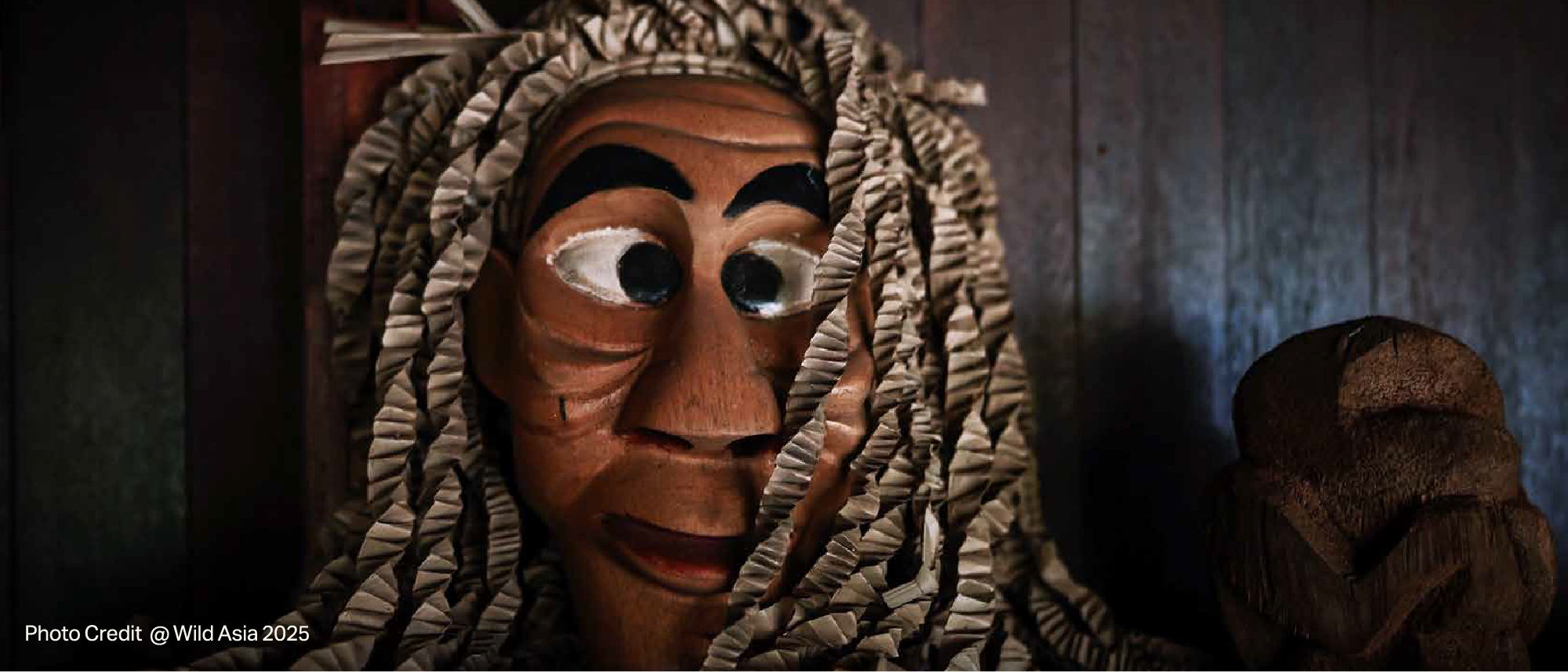
A traditional Mah Meri woodcarving from Samri’s workshop, reflecting ancestral stories, cultural identity and a craft sustained across generations.
When he is not on the road, he divides his time between the farm and his workshop. During harvest season, he spends an average of three days a week on the farm. Relying on custom orders, he usually takes about a month to complete a single mask, which sells for around RM3,000.
“On a good month, when the ‘mood’ is right and there’s a burst of creativity, I can complete two masks,” he says with a grin. An enterprising spirit, he also designs printed T-shirts using natural materials such as leaves and flowers to sell at craft events, and teaches woodcarving to the youths in his community. His young apprentices see firsthand how sustainable palm oil enables families like Samri's to preserve Malaysia’s cultural heritage while contributing to food security and nutrition.
“My legacy is to preserve our cultural heritage and pass down the Mah Meri woodcarving tradition and oral histories to the next generation,” says Samri, with conviction. “I tell the young people—woodcarving can earn you a side income. But more importantly, it’s something you can do in your free time, after working on the farm!”
Samri embodies the resilient spirit of the Mah Meri—a people grounded in their identity, preserving culture while adapting to the shifting realities of modern life.
For the master craftsman and his community, palm oil is more than a crop; it is a bridge between tradition and health, carving a future where heritage and sustainability thrive together.
Samri's story is also told in his own words on film.
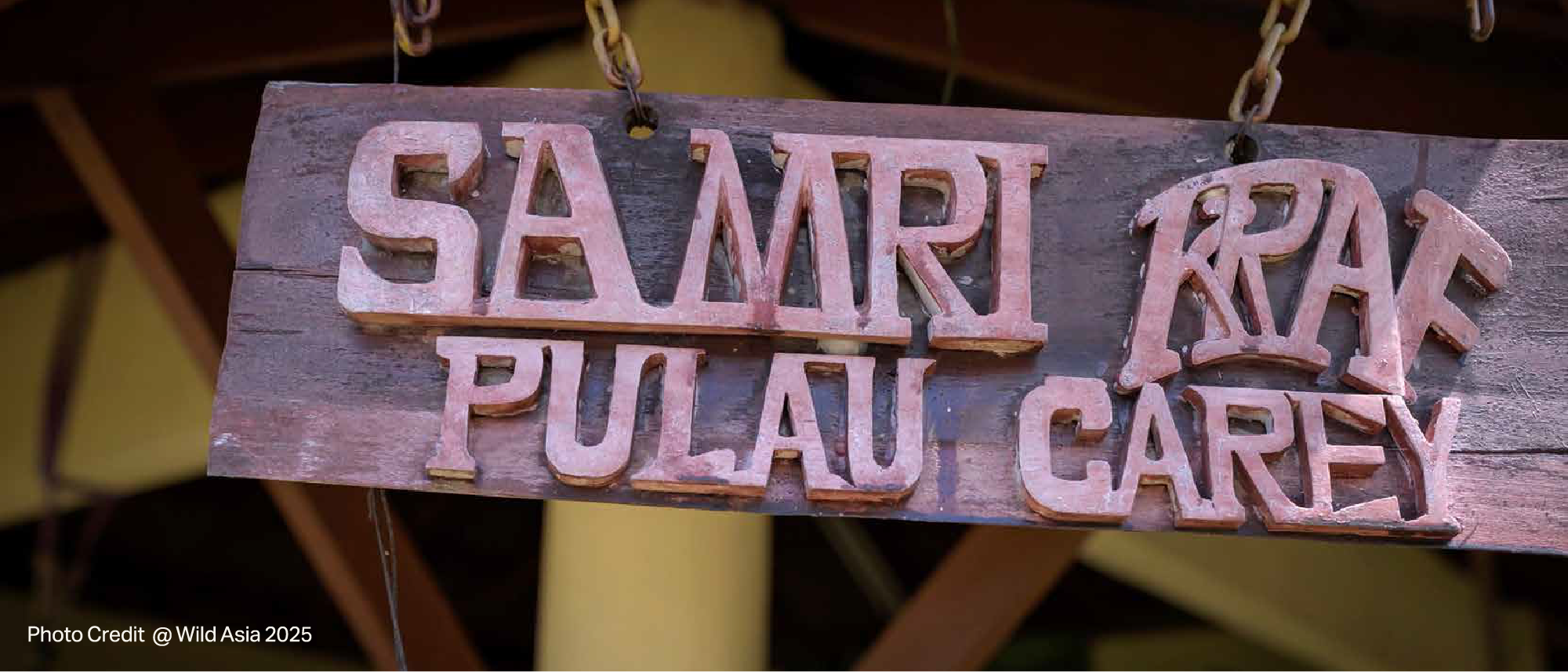
The entrance to “Samri Kraf Pulau Carey”, where Samri continues his woodcarving practice while managing the oil palm farm inherited from his family.