
Crude palm oil (CPO) prices have traded within a wide range of RM4,600 to RM5,050 (USD1,127 to USD1,237) per tonne since August, with geopolitical developments remaining a major influence on price movements. Despite recent volatility, palm oil prices remained approximately 18% higher year-to-date as of mid-October 2026. Malaysia typically enters its monsoon season in early November, with rainfall expected to continue through January 2027, temporarily easing the dry conditions associated with El Niño.
Heading into November, palm oil prices are expected to be influenced by the following factors:
Black Sea Disruptions to Constrain Sunflower Oil Supply
Global sunflower seed production is projected to reach a record high, but crushing activities remain constrained by ongoing logistical disruptions in the Black Sea region. As a result, sunflower oil availability in the global market, particularly for major importers such as India, is expected to remain limited over the next few months unless a safe shipping corridor is established.Seasonal Production Decline to Reduce Stock Levels
Malaysian palm oil production is believed to have peaked in September and is expected to decline seasonally from October through the first quarter of 2027. This should help ease the current stock levels and provide support to palm oil prices over the coming months.Biodiesel Demand Remains a Key Price Support
Elevated energy prices are expected to remain a key supportive factor for the vegetable oil market, as they continue to favour biodiesel blending globally, particularly in Indonesia. According to GAPKI data, Indonesia’s palm oil consumption for biodiesel reached a record monthly high of 1.35 million tonnes in August 2026, 74% higher than its consumption for food applications.
A Brief Market Recap
India reduced import duties on major vegetable oils in late September to lower consumer prices ahead of the Diwali celebrations in November. Import duties on crude palm oil and crude soybean oil were reduced from 10% to 5%, while the duty on crude sunflower oil was lowered to 0%. Meanwhile, duties on refined palm oil and soybean oil were reduced from 32.5% to 27.5%, while the duty on refined sunflower oil was lowered to 22.5%.
China has announced reciprocal tariff exemptions for a broad range of US agricultural products, including corn, wheat, meal, sorghum, vegetable oils, meat and dairy products. These products will instead be subject to standard Most-Favoured-Nation (MFN) tariff rates. However, soybeans remain excluded from the tariff reduction list and will continue to face additional duties.
Thailand’s Department of Internal Trade has proposed increasing the country’s palm oil reserves by 20% to cushion against potential production losses associated with El Niño related dry conditions and stabilise the domestic market amid supply and price risks. Thailand typically maintains palm oil stocks of around 350,000 tonnes. A 20% increase would raise stocks to approximately 420,000 tonnes, equivalent to around two months of domestic consumption.
Malaysia's Palm Oil Supply and Demand for September 2026
Table 2: Monthly statistics of Malaysian palm oil for September 2026 (MPOB, 2026).
Palm Oil Supply and Demand Dynamics in September: Key Changes and Trends
Malaysian palm oil production increased by 16.4% to 2.11 million tonnes in September, supported by higher fresh fruit bunch (FFB) output and improved oil extraction rates (OER). Production in 2026 is believed to have peaked in September and is expected to decline seasonally over the next five months.
Meanwhile, cumulative palm oil exports increased by 4.3% year-on-year in the first nine months of 2026, despite a 12.1% decline in September to 1.12 million tonnes. The weaker monthly export performance was mainly attributed to limited vessel availability in the Strait of Malacca and increased competition from Indonesia. Indonesian palm oil exporters accelerated shipments ahead of new export regulations announced in June 2026 and a higher export duty scheduled for October following an increase in the reference price.
The weakness in September exports is likely to be temporary, with shipments projected to increase significantly from October to December, supported by improving vessel availability and tighter supplies of soft oils. The easing of palm oil prices from their September highs could also encourage global buyers to secure forward shipments at more favourable prices.
Beyond palm oil, Malaysia’s oleochemical exports increased by 9.3% to 2.19 million tonnes in the first nine months of 2026. All five major export markets, except the US, recorded growth. Exports to the EU27 increased by 20.4%, India by 15.6%, China by 14.7% and Japan by 13.1%, while exports to the US declined by 19.4%.
Following the US announcement of preliminary anti-dumping duties on fatty acids from Malaysia and Indonesia on 16 September 2026, Malaysian exporters are expected to benefit from lower duty rates than Indonesian counterparts. This could improve the competitiveness of Malaysian fatty acids in the US market and support a recovery in oleochemical exports to the US over the coming months.
Malaysia’s Oleochemical Exports, from January to September 2026 (in tonnes)
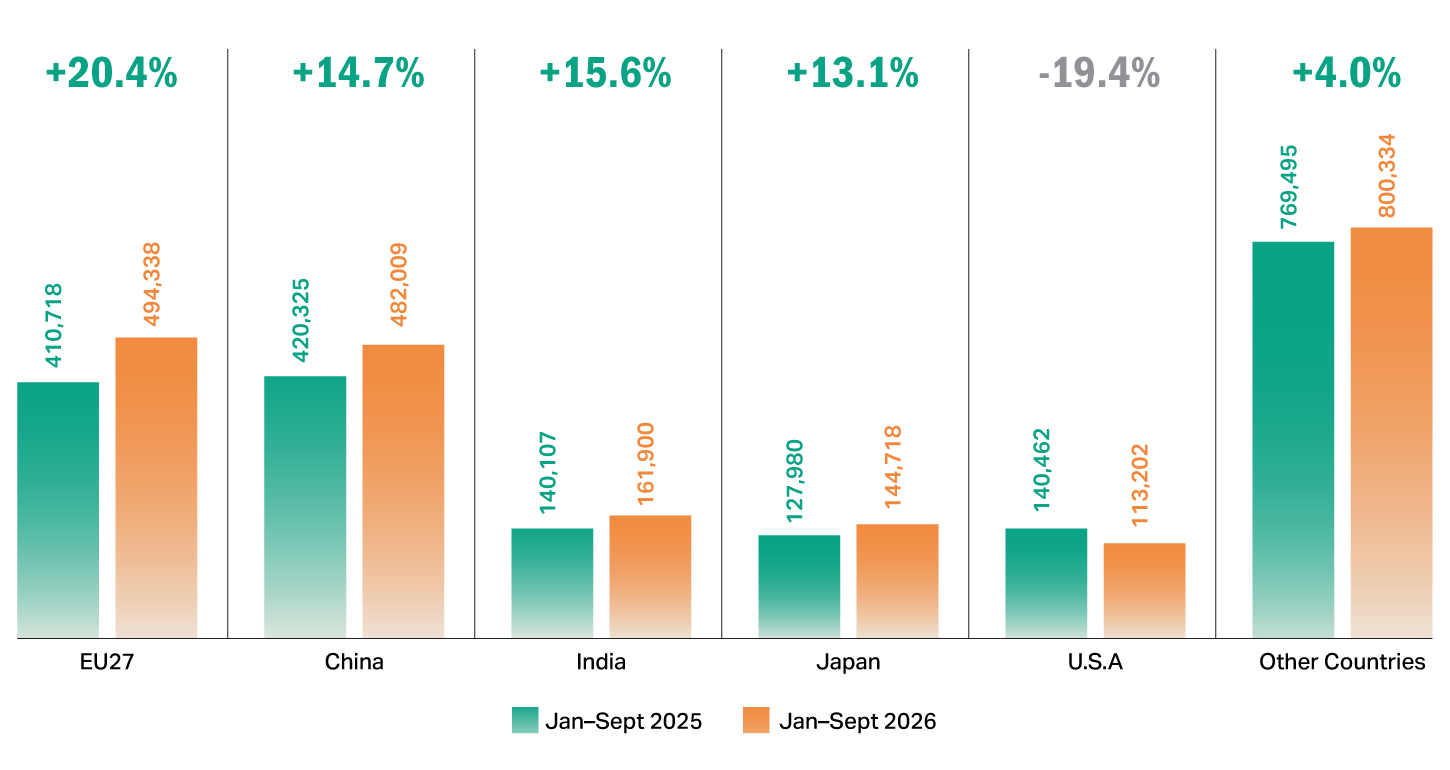
Figure 4: Malaysia’s oleochemical exports, from January to September 2026 (MPOB, 2026).
Palm Oil Price Outlook: Seasonal Production Decline and Stronger Export Demand
Global vegetable oil prices eased from their multi-year highs in October, with South American soybean oil prices declining by 1%, European rapeseed oil by 3% and Malaysian palm oil by 5%. In contrast, Argentine sunflower oil prices strengthened by 3%, supported by limited supply from the Black Sea region. The uneven price correction across major vegetable oils has significantly improved palm oil’s price competitiveness against soft oils, which is expected to contribute to a strong recovery in export demand over the coming months.
Ongoing logistical disruptions in the Black Sea region continue to constrain crushing activities, limiting sunflower oil availability in the global market over the next few months unless a safe shipping corridor is established. This is despite expectations that global sunflower seed production will reach a record 65.3 million tonnes in 2027, with most of the increase coming from the Black Sea region.
Indonesia’s Domestic Palm Oil Consumption, from 2022 to August 2026
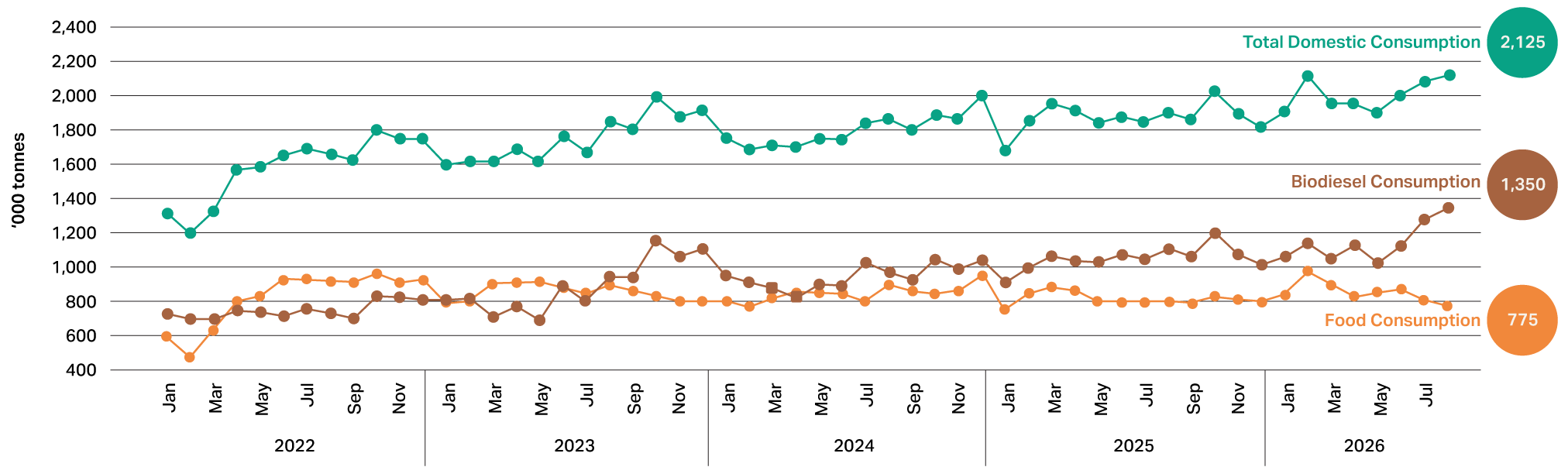
Figure 5: Indonesia’s domestic palm oil consumption, from 2022 to August 2026 (GAPKI, 2026).
Beyond the constraints on sunflower oil supply, soybean oil availability from South America is also expected to decline as the region enters its soybean planting season from October to December. As a result, India is expected to rely more heavily on palm oil imports to meet its vegetable oil requirements in the coming months, particularly to replenish stocks following the Diwali celebrations in November. A similar trend is expected in China, where reduced soybean supplies from Brazil could encourage higher palm oil consumption.
The seasonal decline in palm oil production is expected to reduce current stock levels, with Malaysian palm oil inventories projected to trend lower from November 2026 through February 2027. This should provide further support to palm oil prices in the final quarter of 2026.
Meanwhile, elevated energy prices remain a key supportive factor for the vegetable oil market, as they continue to favour biodiesel blending globally, particularly in Indonesia. According to GAPKI data, Indonesia’s palm oil consumption for biodiesel reached a record monthly high of 1.35 million tonnes in August 2026, 74% higher than its consumption for food applications (see Figure 5). This translates into an annualised palm oil requirement of approximately 16 million tonnes, suggesting that Indonesia is progressing towards full implementation of its B50 biodiesel blending mandate.
Looking ahead, CPO prices are expected to remain firm above RM4,600 (USD1,127) per tonne in November, supported by seasonal production declines and sustained biodiesel consumption. India's recent reduction in vegetable oil import duties is also expected to encourage a recovery in palm oil imports over the coming months. The main downside risks include an easing of energy prices and weaker-than-expected global vegetable oil consumption for food applications amid inflationary and economic pressures.
Exchange Rate: USD1 = RM4.08