
From Surfactants to Coatings:India’s Growing Demand for Palm-Based Oleochemicals

India’s household products market for palm-based oleochemicals — spanning surfactants, adhesives and architectural coatings — is on course to grow from USD821 million in 2025 to USD1.44 billion by 2034. According to the same market study commissioned by the Malaysian Palm Oil Council (MPOC) that anchored the first article in this series, surfactants alone will account for roughly 90% of the market by volume, while the household-care sector’s own wave of consolidation offers Malaysian suppliers a parallel opportunity to the one already identified in personal care.Part 2
This is the second and final article in a two-part series drawn from market studies commissioned by MPOC. Part 1 looked at India’s personal care oleochemicals market; this article turns to household products — the surfactants used in detergents and cleaners, the resins and coalescents used in architectural coatings, and the adhesives used across construction and packaging.
Both personal care and household products draw on the same foundation. India’s overall basic oleochemicals market — fatty acids, fatty alcohols, methyl esters and glycerine, across all end uses — reached an estimated 2.20 million tonnes in 2025 and is forecast to expand to 4.07 million tonnes by 2034, a compound annual growth rate (CAGR) of 7.09%. Soap and detergents is the second-largest application within that total, at an estimated 657,480 tonnes in 2025, and is projected to reach 1.15 million tonnes by 2034 at a CAGR of 6.43% — close behind cosmetics and personal care, the application covered in Part 1.
India’s Basic Oleochemicals Market by End-Use Application, 2025 Versus 2034

Figure 1: India’s basic oleochemicals market by end-use application, 2025 versus 2034, in tonnes (Mordor Intelligence, Custom Report for MPOC, 2025).
As with personal care, India cannot meet this demand through domestic supply alone. The country’s oleochemical imports crossed 850,000 tonnes in 2024, with Indonesia, Malaysia and China among the main sources. That reliance on imports, and the opportunity it represents for Malaysian suppliers, runs through both articles in this series.
A Growing Market with Diverse Applications
Narrowing to palm-based oleochemicals used specifically in household products, the market was valued at an estimated USD821.22 million (596,020 tonnes) in 2025 and is forecast to reach USD1.44 billion (983,270 tonnes) by 2034 — a CAGR of roughly 5.7% by volume and 6.4% by value.
Surfactants dominate this market, accounting for close to 90% of volume and growing at 5.83% a year, making them the fastest of the three product categories. Architectural coatings account for most of the remainder, growing at 5.32% a year, while adhesives form the smallest and slowest-growing segment, at 2.67% a year.
India’s Palm-Based Household Products Oleochemicals Market by Product, 2025 Versus 2034
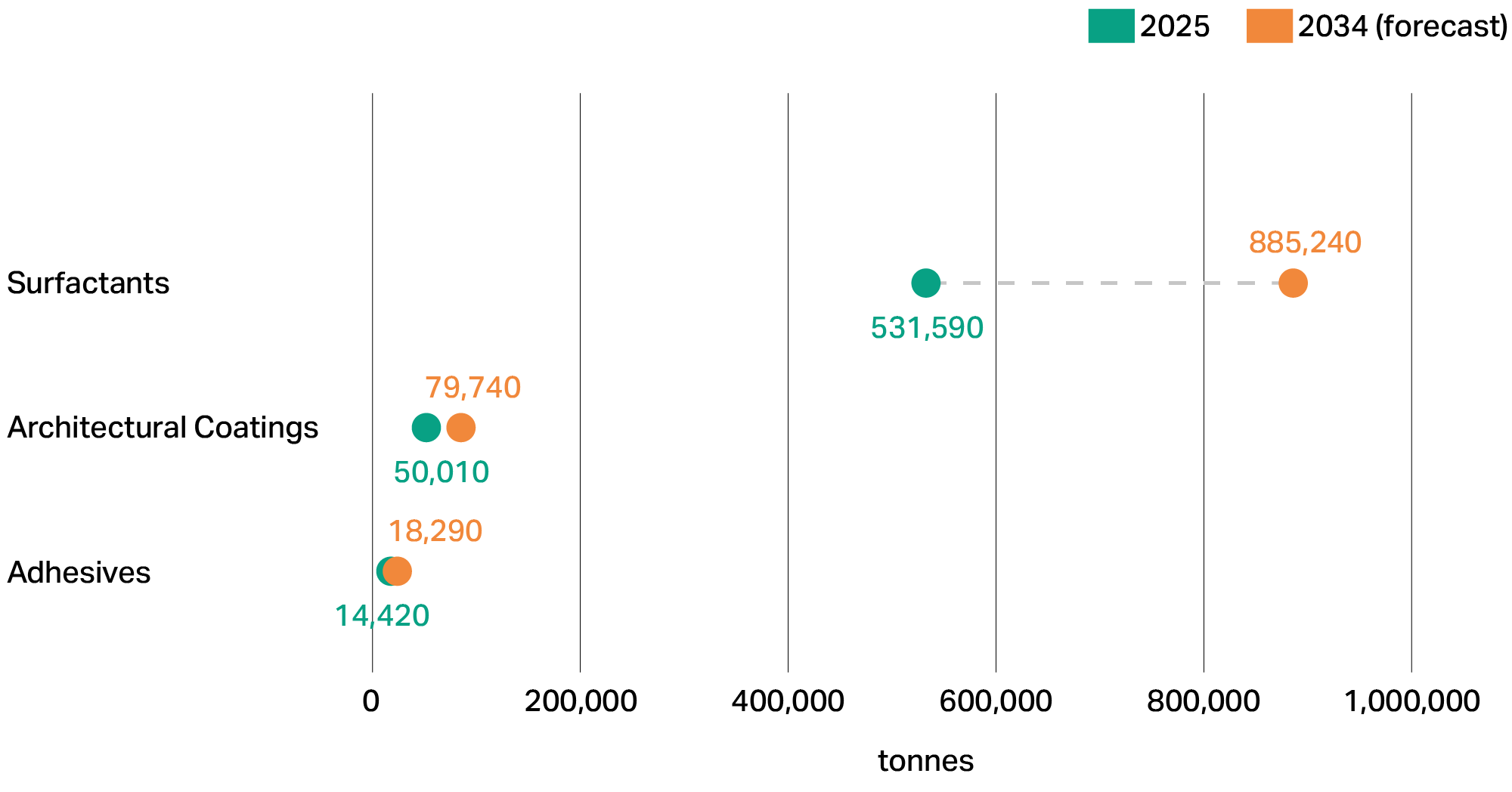
Figure 2: India’s palm-based household products oleochemicals market by product, 2025 versus 2034, in tonnes (Mordor Intelligence, Custom Report for MPOC, 2025).
Within surfactants, laundry detergent is by far the largest and fastest-growing sub-segment, expected to account for half of surfactant volume by 2034, as Indian households continue to shift from powders towards liquid and premium formats. Fabric softeners are the second-largest and second-fastest growing category, while surface cleaners, dishwashing liquids, toilet cleaners and air fresheners make up smaller, more slowly growing categories. Hindustan Unilever’s own commentary on its FY2025 results pointed to household-care volumes growing in the high single digits, with its fabric wash and household-care liquids lines posting double-digit growth — consistent with the study’s broader premiumisation narrative.
Architectural coatings and adhesives are smaller by volume, but are where regulatory pressure is playing the most significant role. India’s paint and coatings industry, valued at close to USD14 billion in 2024, is tightening permissible volatile organic compound (VOC) levels under Bureau of Indian Standards limits and the government’s Eco-Mark scheme, pushing formulators towards palm-derived fatty acid methyl esters and alkoxylates as replacements for solvent-heavy inputs. The coatings sector is also undergoing one of its largest ownership shake-ups in years: JSW Paints’ roughly USD1.64 billion acquisition of a majority stake in AkzoNobel India, completed in mid-2025, is reshaping a market historically led by four established players.
India’s Palm-Based Household Products Oleochemicals Market by Intermediate, 2025 Versus 2034
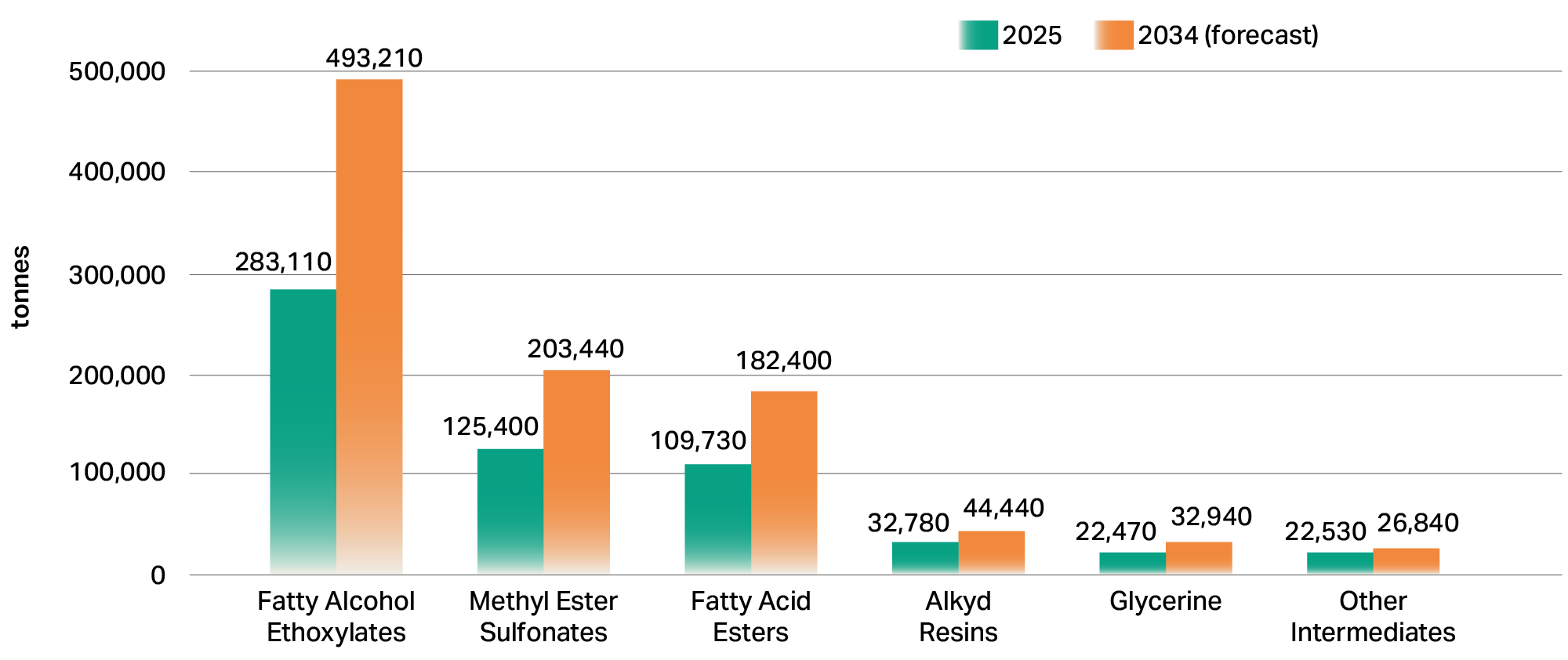
Figure 3: India’s palm-based household products oleochemicals market by intermediate, 2025 versus 2034, in tonnes (Mordor Intelligence, Custom Report for MPOC, 2025).
What is Driving Demand
Two forces stand out in the study, echoing but remaining distinct from those identified in personal care. The first is regulatory: tightening VOC limits in paints and coatings are encouraging manufacturers to adopt palm-derived fatty acid methyl esters and fatty alcohol ethoxylates as functional replacements for petrochemical solvents, without breaching emissions thresholds. The second is the same consumer shift towards sustainable and biodegradable ingredients seen in personal care. Palm-derived surfactants such as methyl ester sulfonates and alkyl polyglucosides biodegrade faster than their petrochemical counterparts, supporting both effluent-treatment compliance and the certified-sustainable-palm-oil positioning that brands are increasingly building into their marketing.
Who is Supplying India’s Household Products Sector
The competitive landscape is broader here than in personal care, reflecting the three distinct product lines involved. AWL Agri Business Limited (formerly Adani Wilmar) again leads, drawing on its Mundra oleochemical plant. Godrej Industries ranks second, supplying fatty acids, glycerine and stearic acid to household-care manufacturers, while Olivia Oleo — a three-decade regional player sourcing from Malaysia, Indonesia, Thailand and India — ranks third. Galaxy Surfactants, Fairchem Organics, Fine Organics, Jocil and smaller specialists such as Jatan Greentech round out a diverse supplier base, although the study notes that only a small number of companies serve the coatings and adhesives niches specifically.
Consolidation is visible across all three product lines. Godrej is expanding its fatty alcohol and glycerine capacity by 35,000 and 24,000 tonnes a year respectively, while AWL Agri Business took a 67% stake in a specialty chemicals producer in mid-2024. Patanjali Foods also moved to acquire Patanjali Ayurved’s personal and household care business for INR1,100 crore (around USD132 million). The JSW–AkzoNobel deal noted earlier is, by some distance, the largest of these moves and signals the scale of capital now being directed towards India’s coatings value chain.
Where Malaysia’s Opportunity Lies
India will remain a net importer of palm oil, sourcing more than 90% of its palm oil imports from Indonesia and Malaysia, and the same dynamics flagged in Part 1 apply here. Indonesia’s implementation of its B50 biodiesel mandate could absorb around 17 million tonnes of palm oil annually for domestic blending — some 3 million tonnes more than under the B40 mandate — leaving an estimated 22 million tonnes available for export, compared with a historical range of 24–28 million tonnes a year. Should the mandate proceed as expected, the study suggests Malaysian suppliers would be well placed to position themselves as a reliable alternative for Indian buyers.
India’s Oleochemicals Imports Versus Exports by Category in 2024
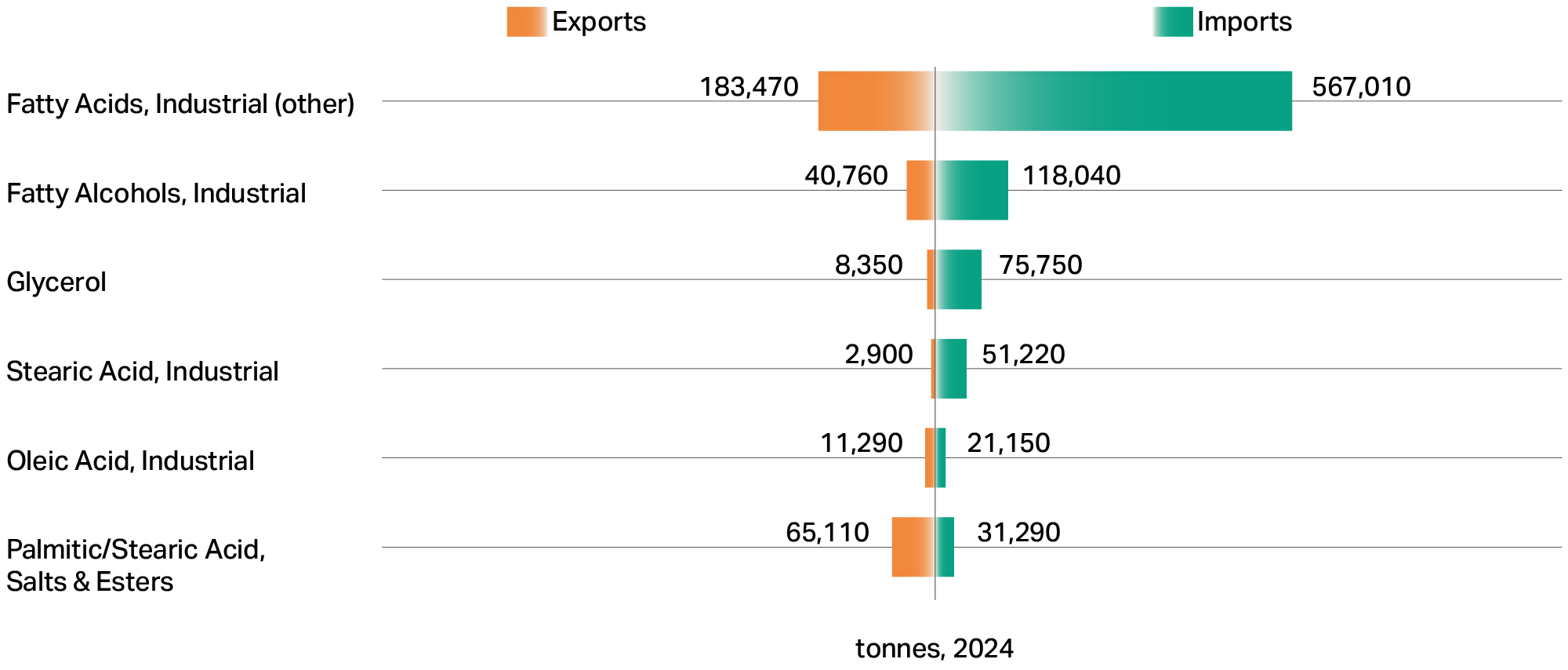
Figure 4: India’s oleochemicals imports versus exports by category in 2024, in tonnes (Mordor Intelligence, Custom Report for MPOC, 2025).
There is a second, more specific opening in this market. Despite India accounting for roughly 19% of global palm oil imports, only around 3% of those imports carried certified sustainable palm oil credentials as of mid-2024. For Malaysian suppliers able to demonstrate traceability and sustainability credentials, that gap represents a potential competitive opportunity, particularly as multinational household-goods brands face growing pressure to document their supply chains. India’s own customs-duty policy has also been unusually volatile through 2025 — including a cut to Basic Customs Duty on crude palm oil in May, following a period of contract cancellations when Malaysian futures prices spiked. This highlights a market still finding its footing on trade policy, although recent duty reductions are expected to support Malaysian shipments over the medium term.
Across the six oleochemical categories tracked in both reports, India imported around 864,000 tonnes and exported close to 312,000 tonnes in 2024 — the same trade gap discussed in Part 1, and one that applies as much to the surfactants, coatings and adhesives value chains as it does to personal care.
Taken together, the two reports in this series point to the same underlying conclusion from two different directions. Whether the entry point is a shampoo bottle or a tin of paint, Malaysian producers that continue to compete primarily as raw-material exporters may find that position harder to sustain as India builds out its own manufacturing capacity. The larger opportunity, as identified by the study, is manufacturing-led: localising production, capturing import substitution and integrating directly into India’s FMCG, pharmaceutical and household-goods supply chains, where Indian producers are already securing internationally recognised sustainability credentials that multinational buyers increasingly expect.