
CPO Prices to Stay Firm Above RM4,600 (USD1,127) in October Amid Weather Risks and Strong Energy Markets
Crude palm oil (CPO) prices traded between RM4,600 and RM5,050 (USD1,127–USD1,238) per tonne in September, with prices retreating from recent highs despite continued support from elevated energy prices and concerns over potential production losses in 2027 due to El Niño. Climatologists expect El Niño to peak only in early 2027, with its severity potentially comparable to the 1997/98 and 2015/16 episodes. Palm oil prices have therefore been driven more by geopolitical developments and climate risks than by underlying supply and demand fundamentals.
Heading into October, palm oil prices are expected to be shaped by the following factors:
Intensifying El Niño Conditions
Dry weather associated with El Niño has become more pronounced across Malaysia and Indonesia since August, raising concerns over its potential impact on palm oil production six to nine months later.Tighter Vegetable Oil Supply in 2027
Global production of the four major vegetable oils is projected to increase by 3.1 million tonnes, while consumption is expected to rise by 6.1 million tonnes, significantly outpacing production growth.Energy Market Remains Supportive
Energy prices continue to strengthen amid escalating geopolitical tensions, with gasoil prices up 147% year-to-date by mid-September and crude oil prices up 73%.
A Brief Market Recap
Saudi Arabia shut down its East-West oil pipeline facilities on 11 September 2026 following damage caused by the escalation of the conflict. Since maritime disruptions escalated in the Strait of Hormuz, Saudi Arabia has increasingly rerouted its energy exports from the Persian Gulf to the Red Sea port of Yanbu via the East-West pipeline.
Analysts estimate that the pipeline disruption could affect crude oil flows equivalent to around 4% of global supply, adding further pressure to an already tight energy market. Following the disruption, Brent crude oil prices reached around USD110 per barrel, while ICE gasoil prices approached USD1,500 per tonne in mid-September.
The surge in energy prices has intensified global inflationary pressures and reinforced concerns over persistent inflation. Against this backdrop, the US Federal Reserve raised interest rates by 25 basis points on 16 September 2026, marking its first interest rate hike in three years and a renewed tightening of US monetary policy.
Malaysia's Palm Oil Supply and Demand for August 2026
Table 1: Monthly statistics of Malaysian palm oil for August 2026 (MPOB, 2026).
Palm Oil Supply and Demand Dynamics in August: Key Changes and Trends
Malaysia’s palm oil production rose marginally by 1.4% month-on-month to 1.81 million tonnes in August 2026, supported by higher fresh fruit bunch (FFB) collection and an improvement in the oil extraction rate (OER) from July. Nonetheless, output remained below the level recorded a year earlier, marking the sixth consecutive month of year-on-year decline since March 2026.
Cumulative palm oil exports from January to August 2026 rose by 806,000 tonnes to 10.4 million tonnes. However, exports fell 7.5% month-on-month in August to 1.29 million tonnes, weighed down by weaker shipments to South Asia and the Middle East. Despite the monthly decline, full-year exports are projected to reach 16.0 million tonnes, 5.2% higher than the volume recorded in 2025.
The combination of higher production and weaker exports lifted palm oil stocks to 2.82 million tonnes in August. Production and stock levels in both Malaysia and Indonesia are expected to ease in the coming months.
Changes in Malaysia’s Palm Kernel Oil Supply and Demand, January to August 2026
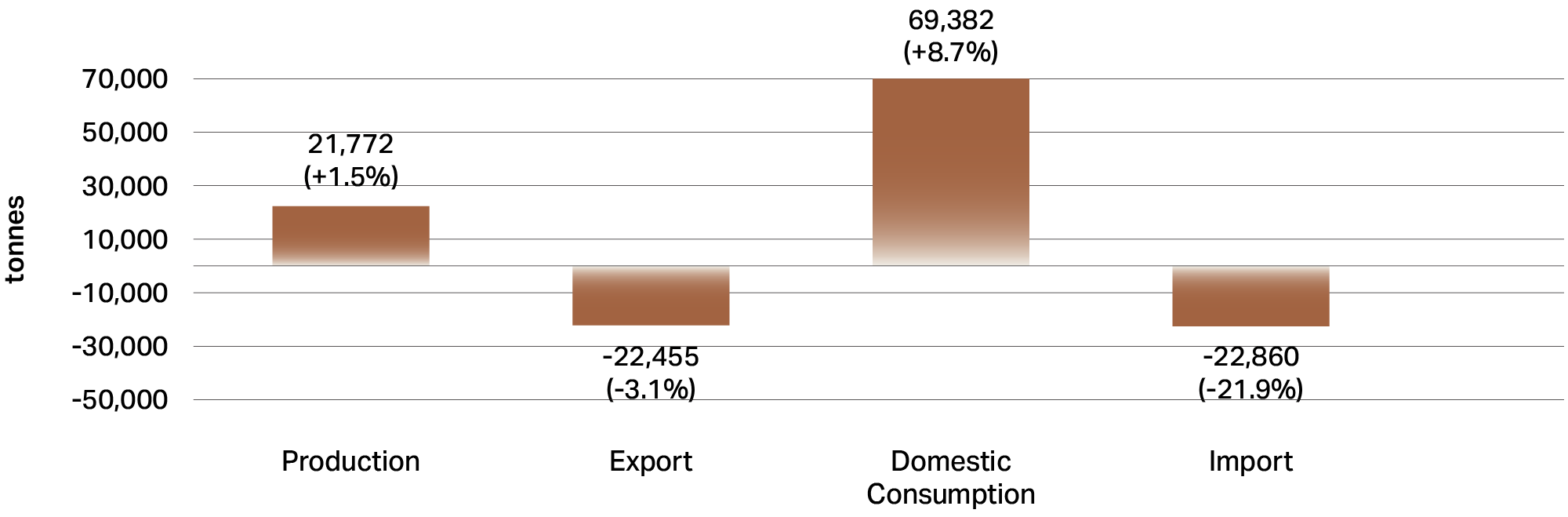
Figure 5: Changes in Malaysia’s palm kernel oil supply and demand (MPOB, 2026).
While palm oil stocks increased, Malaysia’s palm kernel oil (PKO) stocks fell to 339,000 tonnes in August 2026. From January to August, PKO production increased by only 21,000 tonnes, while combined exports and domestic usage rose by 47,000 tonnes, outpacing production growth as shown in Figure 5. Tighter PKO supply dynamics are also reflected in the European market, where PKO traded at a premium over coconut oil in July, August and September.
Palm Oil Price Outlook:
Weather Risks and Energy Markets Support CPO Prices
Global vegetable oils recorded a mixed performance in September. Malaysian palm oil prices led the gains, rising 3.5% during the month, followed by Argentine soybean oil at 3.3%. Meanwhile, Argentine sunflower oil prices fell 6.1%, while European rapeseed oil declined marginally by 0.4%. The sharp decline in sunflower oil prices was mainly driven by increasing supply pressure as Ukraine and Russia entered their sunflower seed harvesting season in September.
Dry weather associated with El Niño has become more pronounced across Malaysia and Indonesia since early August, raising concerns over its potential impact on palm oil production six to nine months later. Rainfall in Indonesia was around 20% below average in July and 60% below average in August, while Malaysia also experienced drier conditions, with rainfall around 30% below average in August.
According to Oil World, Indonesia’s palm oil production is forecast to decline by 1.9 million tonnes in 2027, while Malaysia’s production is forecast to fall by 0.7 million tonnes. Indonesia’s exports are also projected to decline by almost 3 million tonnes in 2027, reflecting firmer domestic demand from biodiesel blending and a weaker production outlook.
In Malaysia, exports are projected to remain stable at around 16 million tonnes in 2027. As a result, Malaysia is expected to play an increasingly important role in supplying palm oil to global consumers. The current high stock level is therefore likely to be temporary.
Major Vegetable Oil Production and Consumption Changes, 2026 Versus 2027F
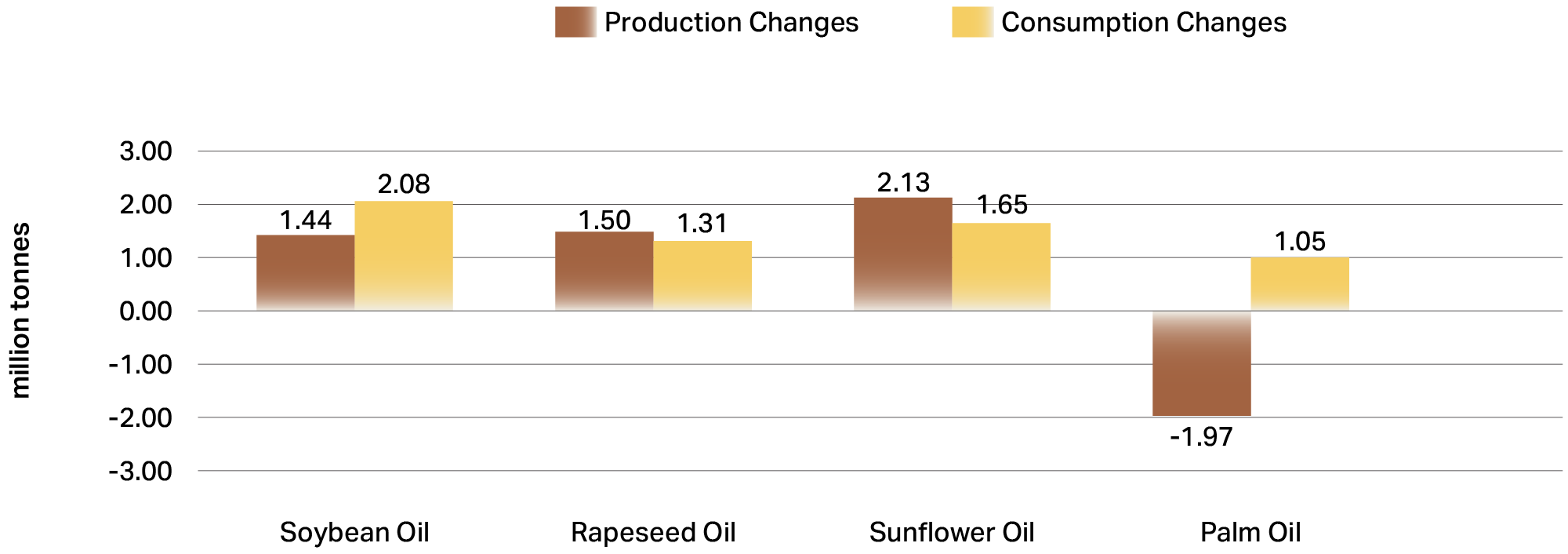
Figure 6: Major vegetable oil production and consumption changes, 2026 versus 2027F (Oil World, 2026).
Global production of the four major vegetable oils is projected to increase by 3.1 million tonnes, while consumption is expected to rise by 6.1 million tonnes, significantly outpacing production growth (see Figure 6). The supply shortfall is mainly due to a projected decline in palm oil output in Southeast Asia, while higher palm oil production in Latin America is unlikely to fully offset the decline. Nonetheless, weather developments in October and November will be critical in determining the eventual impact on 2027 output.
Energy market disruptions intensified following the shutdown of Saudi Arabia’s East-West pipeline facilities after escalation in the conflict. This added to existing supply concerns from shipping interruptions in the Strait of Hormuz and the Bab el-Mandeb Strait. As a result, biofuel blending margins have improved further.
Vegetable Oil and Energy Price Changes, 1 January to 15 September 2026 (%)

Figure 7: Vegetable oil and energy price changes, January to September 2026 (Oil World, 2026).
Figure 7 shows that gasoil prices were up 147% year-to-date by mid-September, while crude oil prices rose by 73%, well above the 21% increase in CPO prices over the same period. Indonesia’s domestic crude palm oil prices were trading around USD600 per tonne below ICE gasoil prices in September.
Looking ahead, crude palm oil prices are expected to remain firm above RM4,600 (USD1,127) per tonne in October and likely throughout the rest of the year, underpinned by weather uncertainty and favourable energy markets. The main downside risks are an easing in energy prices and further stock accumulation, as palm oil production typically reaches its seasonal peak in September or October.
Exchange Rate: USD1 = RM4.08