
CPO Prices to Stay Firm Above RM4,600 (USD1,133) on Tightening Supply and Geopolitical Disruptions
Crude palm oil (CPO) prices moved higher in August as market concerns grew over the potential impact of El Nino on production. The US National Oceanic and Atmospheric Administration (NOAA) indicated a 90% likelihood of El Nino developing between September and November 2026, with the event potentially becoming one of the strongest on record.
However, as dry conditions are expected to develop relatively late in the year, the impact could be partly limited by the arrival of the monsoon season in December. Rainfall levels between September and November will therefore be critical in determining the extent of El Nino’s impact on palm oil production next year. Heading into September, palm oil prices are expected to be shaped by the following factors:
Production to Ease in Q4 2026
Malaysia’s palm oil production is expected to seasonally peak in September or October before declining in Q4 2026. As production enters its seasonal downtrend and the oil extraction rate (OER) eases from the high levels recorded earlier this year, palm oil production is expected to decline in Q4 2026, keeping supply tight.Geopolitical Disruptions to Reshape Vegetable Oil Trade Flows
Ongoing geopolitical disruptions are expected to continue affecting global vegetable oil trade flows. India is likely to increase palm oil imports amid disruptions to sunflower oil supplies from the Black Sea, while soybean oil export availability from South America is expected to decline seasonally from September onwards.Biodiesel Economics Remain Supportive
Biodiesel economics remain positive relative to vegetable oils, supporting biodiesel blending demand and providing support to the broader vegetable oil market. Energy prices are also expected to remain firm amid ongoing geopolitical tensions.
A Brief Market Recap
Shipments through the Black Sea have been severely disrupted following the renewed escalation of the Russia-Ukraine conflict. Exports of grains, oilseeds, meals and vegetable oils from the region declined sharply in August. Sunflowerseed crushing in Ukraine also weakened amid growing uncertainty over sunflower oil export flows and logistics.
Meanwhile, shipping through the Bab al-Mandeb Strait and the Red Sea has faced renewed disruption. Talks over the reopening of the Strait of Hormuz also remained deadlocked following the expiry of the 60-day ceasefire Memorandum of Understanding between the US and Iran on 17 August, adding to uncertainty surrounding two vital maritime trade routes.
Oil prices have consequently remained elevated above USD80 per barrel amid persistent uncertainty surrounding these key chokepoints for global energy trade.
Malaysia's Palm Oil Supply and Demand for July 2026
Table 1: Monthly statistics of Malaysian palm oil for July 2026 (MPOB, 2026).
Palm Oil Supply and Demand Dynamics in July: Key Changes and Trends
Malaysia’s palm oil production rose by 9.4% month-on-month to 1.79 million tonnes in July 2026, an increase of 154,000 tonnes. However, production in July 2026 remained below last year’s level, marking the fifth consecutive month of year-on-year decline since March 2026, as shown in Figure 5.
Changes in Malaysia's Palm Oil Production, Year-on-Year
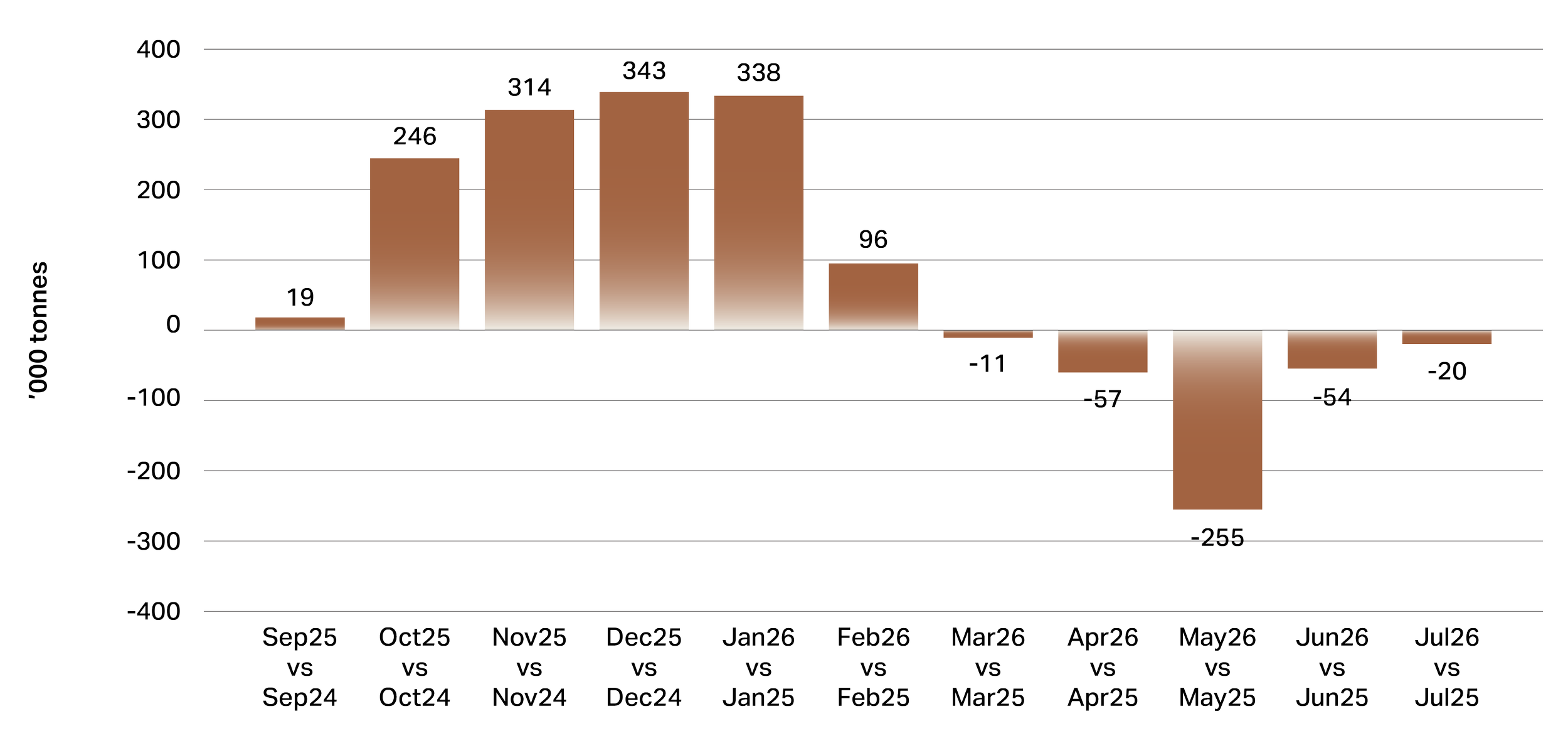
Figure 5: Year-on-year changes in Malaysia’s palm oil production (MPOB, 2026).
Export performance strengthened further in July, with shipments rising by 14.5% month-on-month to 1.39 million tonnes. The improvement was mainly driven by stronger buying from India ahead of Diwali, as well as continued strong demand from the Sub-Saharan Africa region.
For the first seven months of 2026, Malaysia’s palm oil exports reached 9.1 million tonnes, up 10%, or 830,000 tonnes, from the same period last year and the highest level since 2020. India and Sub-Saharan Africa were the key growth markets, with combined shipments increasing by 853,000 tonnes during the period.
Meanwhile, palm oil stocks continued to increase in July, reaching 2.62 million tonnes. However, the stock build-up in Malaysia is not a major concern, as strong biodiesel demand and front-loading of exports in Indonesia have kept Indonesian palm oil stocks relatively low.
Looking ahead, export performance in August is expected to remain strong as India continues to restock ahead of festive demand, helping to reduce palm oil inventories in Southeast Asia. Near-term global demand dynamics have also become more supportive of palm oil, as logistical disruptions affecting competing vegetable oils have increased buyers’ reliance on palm oil supplies.
Palm Oil Price Outlook:
Tightening Supply and Geopolitical Disruptions to Support CPO Prices
The global vegetable oil market continued to be supported by biofuel demand and geopolitical uncertainty in August, with palm oil leading the gains. Malaysian crude palm oil prices rose by 3.9% during the month, compared with increases of 2.7% for sunflower oil and 1.1% for soybean oil in Argentina. Meanwhile, rapeseed oil prices in Europe declined marginally by 0.8%.
Malaysia’s palm oil production typically peaks in September or October before declining in the fourth quarter. Production growth in the first seven months of 2026 was mainly supported by an improvement in the OER of fresh fruit bunches (FFB).
Malaysia's Monthly Oil Extraction Rate (OER), 2026
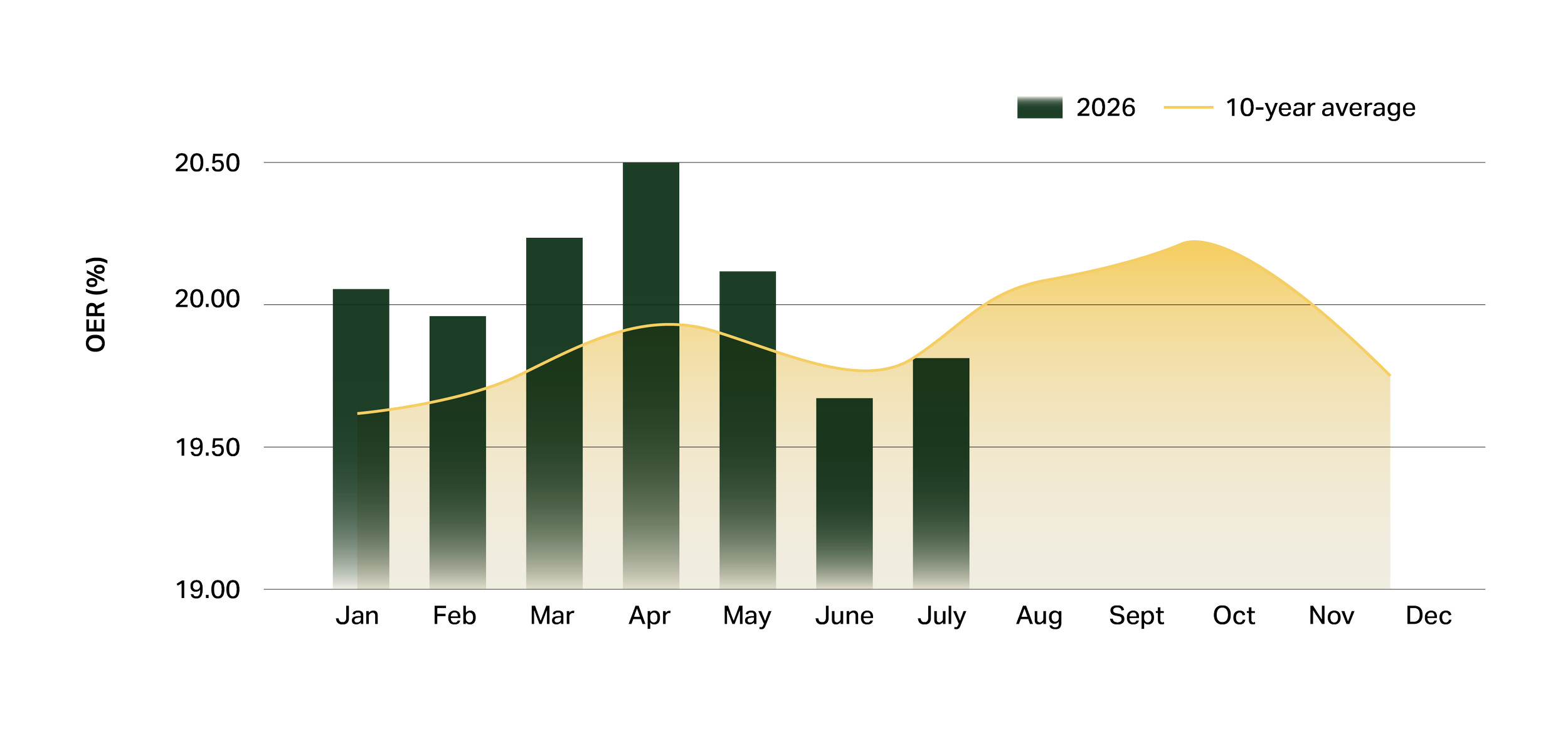
Figure 6: Malaysia’s monthly oil extraction rate for 2026 (MPOB, 2026).
Figure 6 shows that Malaysia’s OER from January to May 2026 was significantly above the 10-year average, supported by favourable rainfall conditions six months earlier. However, OER fell below the 10-year average in June and July 2026 and is projected to remain below the average for the rest of the year.
As production enters its seasonal downtrend in the fourth quarter and OER eases from the high levels recorded between January and May, palm oil production is expected to decline year-on-year in Q4 2026, tightening supply towards the end of the year.
At the same time, ongoing geopolitical disruptions are reshaping global vegetable oil trade flows. Shipping through the Bab al-Mandeb Strait and the Red Sea has been disrupted, while traffic through the Strait of Hormuz has declined following the expiry of the 60-day ceasefire between the US and Iran on 17 August.
Operations at several major ports and crushing plants in the Black Sea region have also been suspended following the renewed escalation of the Russia-Ukraine conflict, adding further uncertainty to sunflower oil export availability over the next one to two months.
These disruptions are shifting vegetable oil demand in major importing markets such as India towards palm oil, particularly ahead of the festive season. This trend was already evident in July, when India’s palm oil imports increased by 49.8% month-on-month and soybean oil imports rose 31.0%, while sunflower oil imports increased by only 3.6% amid tighter supply availability.
Vegetable Oil Price Performance, January to August 2026
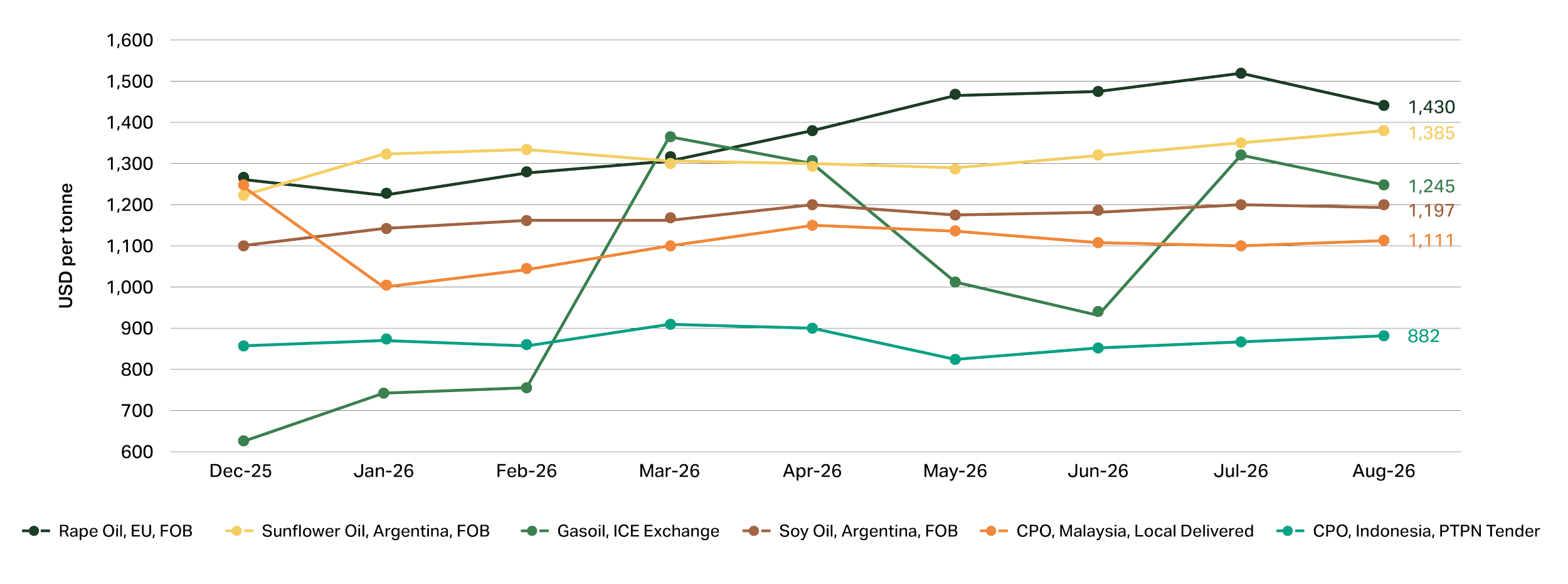
Figure 7: Vegetable oil and gasoil price performance, from January to August 2026
(Oil World, Fastmarkets, MPOB, 2026).
Biodiesel economics have also remained broadly supportive relative to vegetable oils since the start of the West Asia conflict in February, supporting biodiesel blending demand and margins. This is particularly the case in Indonesia, where domestic CPO prices are trading well below gasoil prices, as shown in Figure 7.
As of mid-August, gasoil prices traded on the ICE exchange were also above soybean oil prices in Argentina and palm oil prices in both Malaysia and Indonesia.
Looking ahead, crude palm oil prices are expected to remain firm above RM4,600 (USD1,133) per tonne in September, supported by tightening supply fundamentals and continued geopolitical disruptions to global trade flows.
Crude palm oil futures (FCPO) forward contracts for 2027 traded on Bursa Malaysia Derivatives (BMD) were also above RM5,000 (USD1,231) per tonne as of mid-August, reflecting market concerns over the potential impact of El Nino. Indonesia’s palm oil demand for B50 biodiesel blending could also strengthen further as the three-month transition period to clear the remaining B40 biodiesel stocks ends in September.
However, downside risks remain. An easing of Black Sea logistical bottlenecks, the arrival of new-crop sunflower oil supplies in the export market and lower energy prices as geopolitical tensions improve could lead to a correction in vegetable oil prices.
Exchange Rate: USD1 = RM4.06