
Earth Day Special: A Life Carved Between Wood and Oil Palm
Samri Abdul Rahman, 50, is a Mah Meri master woodcarver and second-generation oil palm independent smallholder from Kampung Sungai Bumbun, Carey Island.
Earth Day fills the calendar with declarations. Yet the truest stories of sustainability are quieter and closer to the ground. This April, Palm Sphere turns to Carey Island, Selangor, where a Mah Meri master woodcarver tends a certified oil palm farm between carving sessions, raising his family in a village where heritage and agriculture have long shared the same soil. His name is A. Samri Abdul Rahman, and this is his story.
Wood scraps and shavings scatter across the floor of a wooden pavilion where the air carries a faint cedar-like fragrance of resin and freshly cut timber. Propped against the wall, intricately carved wooden masks stare back with expressions that shift between humour and menace. Half-finished sculptures of mythical creatures perch on the shelves. Above the entrance hangs a simple sign: “Samri Kraf Pulau Carey” (Samri’s Crafts Carey Island).
Seated on a custom low stool, A. Samri Abdul Rahman works with calm focus. Wielding a carving knife, his hands move with a steady rhythm as he shapes a tiger sculpture from a block of Nyireh Batu (Xylocarpus moluccensis) wood. Beyond the walls of this workshop, another rhythm defines Samri—the everyday work of an oil palm independent smallholder.
For Samri, heritage and agriculture are threads of the same story.
“My masks and sculptures preserve our ancestral stories and identity, while oil palm provides a stable livelihood that sustains my family,” says the Mah Meri master woodcarver and second-generation oil palm farmer. More than just a commodity, palm oil provides a sustainable and nutritious food source that supports healthy families and resilient communities.
In his workshop at "Samri Kraf Pulau Carey," Samri shapes a tiger sculpture from a block of Nyireh Batu wood. Between carving sessions, he tends a three-acre oil palm farm—the same land his father first planted in the 1970s.
Born and raised on Carey Island, Samri was recognised as a Master Craftsman of Mah Meri Sculpture by the Malaysian Handicraft Development Corporation in 2021. Today, he represents Malaysia at international events, carrying with him the stories, artistry and identity of his people.
Where Tradition Meets Change
The Mah Meri are one of 18 Orang Asli (indigenous) tribes of Peninsular Malaysia, known for their Besise’ language and distinct cultural traditions. Numbering just over 4,200 people as of 2024, they live mainly on Carey Island and in nearby Sepang, Selangor. Traces of their nomadic ancestors have been found along the coastal regions of southern Peninsular Malaysia dating back to the 15th century. The first Mah Meri settlements on Carey Island were recorded in the mid-1800s.
Lowland rainforest, mangrove swamps, mudflat shores and winding rivers shape the island’s landscape. For generations, the Mah Meri lived from the forest and the sea, until colonial development began transforming the island in the early 1900s.
Today, about 79% of Carey Island is planted with oil palm, owned by plantation company SD Guthrie Bhd. Five Mah Meri villages remain on the island, including Kampung Sungai Bumbun, where Samri lives. Just an hour’s drive from Kuala Lumpur, the village has around 400 residents, with oil palm cultivation and fishing forming the backbone of local livelihoods.
A Smallholder’s Path to Sustainability
The eldest of six siblings, Samri remembers helping out at the family farm from a young age. In the late 1970s, the Department of Orang Asli Development (JAKOA) allocated land parcels to villagers for agriculture. Samri’s father, a fisherman, was among the first in the village to plant oil palm.
“My job was to collect loose palm fruits during harvest and pull weeds around the palm trees. We couldn’t afford to buy herbicide,” recalls Samri, now 50. Oil palm provided a steady supplement to his father’s fishing income, ensuring there was food on the table and the children could stay in school.
“I was lazy though. I was eight years old, and all I wanted was to play!” he adds with a chuckle.
After leaving school at 15, Samri moved between jobs as a contract harvester and a factory worker for several years. In 1995, his father gave him a three-acre plot of land to start his own oil palm planting.
Like many farmers of his father’s generation, Samri initially learned through trial and error. He sprayed herbicides liberally to control weeds, planted inferior seedlings and fertilised only when he had extra cash.
Everything began to change in 2015. With assistance from JAKOA, Samri received training and guidance from Oil Palm Teaching and Advisory Services (TUNAS) officers from the Malaysian Palm Oil Board (MPOB). TUNAS extension agents support independent smallholders across Malaysia in obtaining Malaysian Sustainable Palm Oil (MSPO) certification through MPOB’s nationwide network of TUNAS offices. As of 2025, there are 49 offices supported by 190 extension agents.
“I learned proper oil palm best practices—from reducing chemical inputs and stacking palm fronds correctly to improve soil nutrients, to following the zero-burning policy,” says the father of two children, aged 17 and 21.
Samri's story is also told in his own words on film.
Samri's journey continues in the May edition of Palm Pulse, where we explore the certification process that transformed how he farms—and the cultural legacy he hopes to pass on to the next generation. Stay tuned.
"This article is part of the Farmer Profile Series—Mah Meri Stories of Land, Livelihood, and Legacy, a collaboration between Wild Asia and MPOC that highlights how Mah Meri oil palm smallholders navigate modern livelihoods while preserving identity, knowledge, and cultural heritage. It is a portrait of resilience—of people rooted in tradition yet adapting to today’s challenges with creativity and pride."
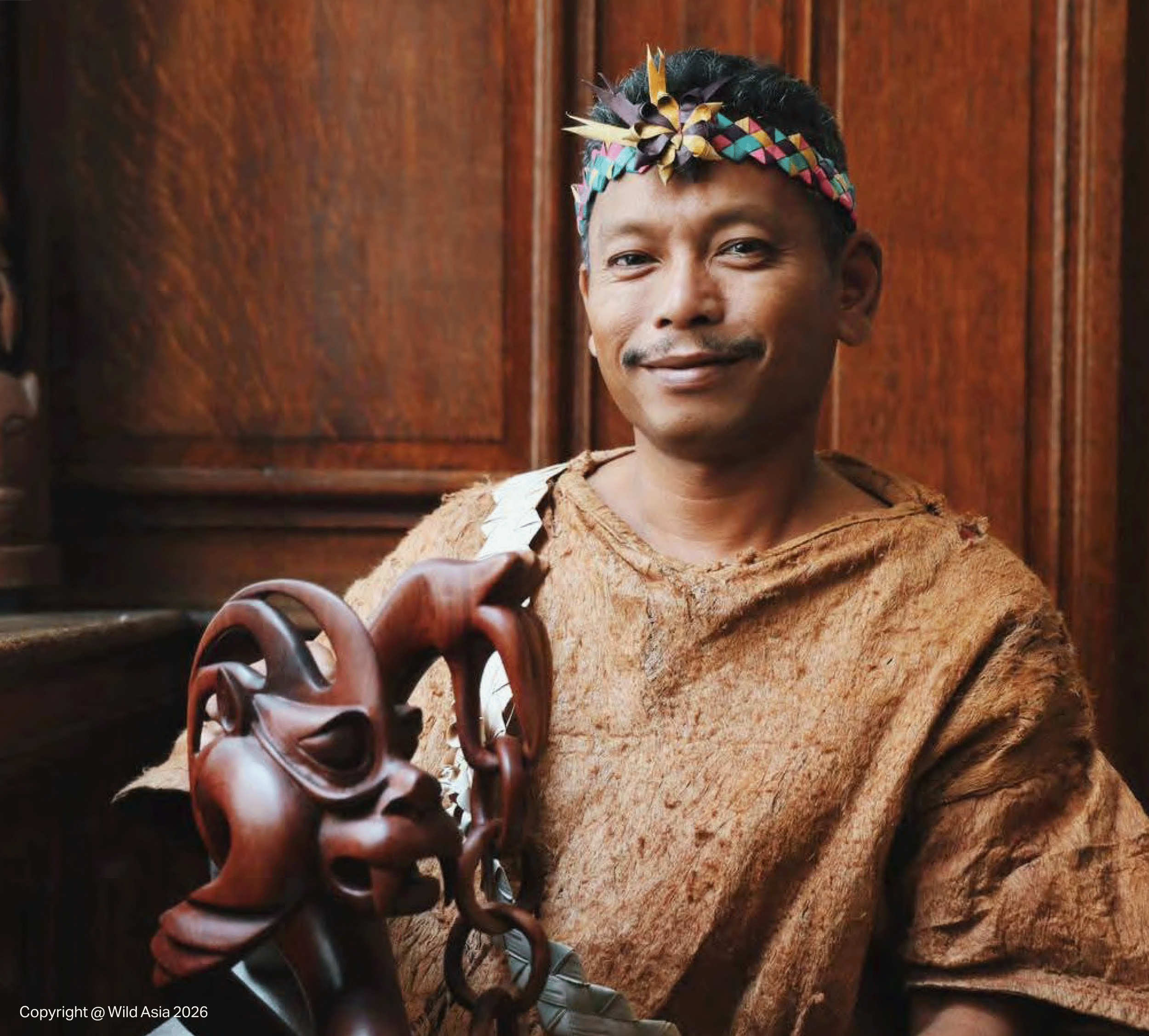
Recognised as a Master Craftsman of Mah Meri Sculpture by the Malaysian Handicraft Development Corporation in 2021, Samri today represents Malaysia at international events, carrying the stories and identity of his people through every piece he carves.