
Central Asia: An Emerging Frontier for Edible Oils

A Strategic Corridor in Global Trade
Central Asia occupies one of the most consequential positions in the evolving geography of global trade. Landlocked yet central, it sits at the convergence of the world's largest economies—flanked by China to the east, Russia to the north, and the energy-rich Middle East to the south. For centuries, these nations served as waypoints along ancient trade arteries. Today, they are being deliberately repositioned as active hubs in a new overland architecture of commerce.
This strategic importance has been sharpened by recent geopolitical disruptions. Instability in the Black Sea and Red Sea—traditional arteries for food and commodity trade—has exposed the vulnerabilities of maritime-dependent supply chains. For a region that imports significant volumes of essential staples, including edible oils, disruption to these routes is not merely an economic inconvenience; it is a food security concern. Central Asia's landlocked geography, once considered a disadvantage, is now driving a deliberate pivot towards land-based corridors that are insulated from maritime chokepoints.
At the centre of this shift is China's Belt and Road Initiative (BRI), which has provided both the capital and the political framework to rebuild Eurasia's overland connectivity. The Trans-Caspian International Transport Route (TITR), widely known as the 'Middle Corridor,' has emerged as the region's lifeline—linking Central Asia through the Caspian Sea and the Caucasus before reaching Europe in as little as 12 to 15 days, compared with 40 to 45 days by sea. For time-sensitive agricultural commodities, this represents a transformative logistical advantage.
Regional Snapshot as at 2025 (Oil World, 2025).
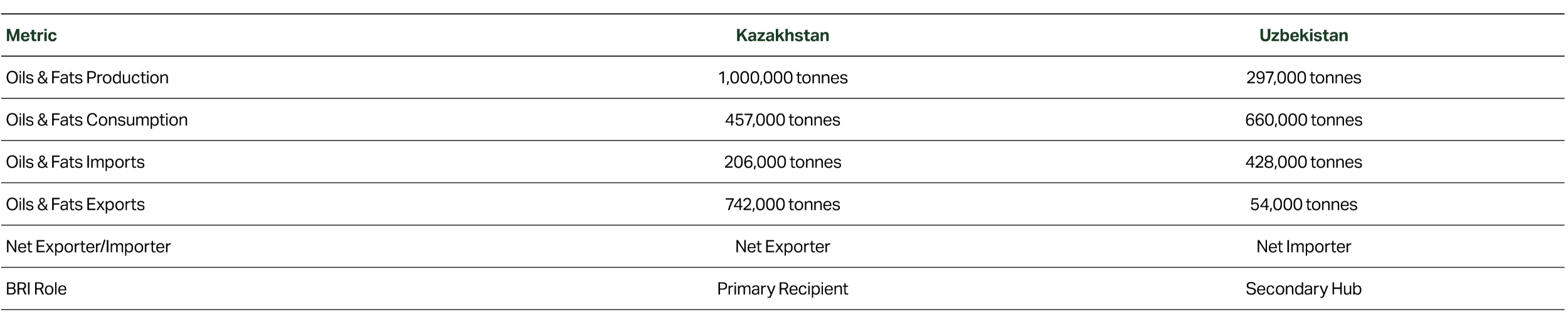
Table 1: Regional snapshot as at 2025 (Oil World, 2025).
Core Product Categories Driving Market Performance
Skincare remained the dominant category in Thailand’s BPC market in 2024, accounting for 38.9% of total sales. This was followed by haircare (17.6%), colour cosmetics (11.9%), and bath and shower products (10.0%). Collectively, these four categories represented 78.4% of total sector sales, underscoring the concentration of demand in core product categories.
The strong performance of skincare reflects growing consumer awareness of skin health, sun protection, and pollution-related concerns. Meanwhile, colour cosmetics and fragrance benefited from increased social engagement and the revival of tourism. Foreign visitors, in particular, have demonstrated rising interest in locally branded beauty products, providing additional support to market expansion.
Shifting Consumer Patterns in a Cost-Conscious Market
Growth in 2024 was driven by an intensified focus on self-care and personal image across both social and professional settings. Thai consumers are increasingly attentive to skin, hair, and oral health, with preventive care gaining prominence over corrective solutions.
However, this positive demand outlook is accompanied by a more competitive and price-sensitive market environment. High household debt levels, labour market pressures, and political uncertainty have fostered cautious spending behaviour. In response, local manufacturers have intensified competition through affordable product formats, notably sachets and smaller pack sizes distributed via convenience stores. These strategies enable consumers to manage expenditure while maintaining regular product usage.
Rising Importance of Oleochemicals in Beauty and Personal Care
Within this increasingly value-driven landscape, oleochemicals have emerged as critical inputs in beauty and personal care formulations. Derived from renewable vegetable oils and fats, oleochemicals perform essential functional roles in personal care products, including cleansing, emulsifying, moisturising, and conditioning. Their cost efficiency, biodegradability, and mildness make them particularly well suited to mass-market applications that must balance affordability with performance and safety.
For manufacturers, oleochemicals facilitate the development of high-quality formulations aligned with sustainability expectations, while remaining competitively priced—an increasingly important consideration in Thailand’s crowded BPC market.
Malaysia’s Position in Thailand’s Oleochemical Supply Chain
Thailand ranked as the seventh-largest importer of Malaysian oleochemicals in 2025, importing 90,641 tonnes, equivalent to 3.3% of Malaysia’s total oleochemical exports. Although this represented a marginal decline from 2024 levels, the softer performance can be attributed partly to intensified competition from Indonesia and elevated feedstock prices (crude palm oil and crude palm kernel oil), which increased oleochemical production costs.
Looking ahead, the medium-term outlook remains positive. With raw material prices moderating and Thailand’s BPC market projected to grow at a CAGR of 6.3% between 2024 and 2029, demand for oleochemicals is expected to strengthen. Should oleochemical utilisation expand in line with overall market growth, Malaysia’s exports to Thailand could increase to approximately 115,600 tonnes within the next five years, reinforcing Malaysia’s role as a key regional supplier.
Moving Up the Value Chain: The Phytonutrients Opportunity
Beyond oleochemicals, palm-derived phytonutrients represent a compelling high-value growth segment. Thailand’s BPC market is increasingly shaped by demand for multi-functional, wellness-oriented products, particularly in skincare, haircare, and oral care. Anti-ageing solutions, serums, moisturisers, and products promoting scalp and skin health are expected to remain key growth drivers as consumers shift further towards preventive care.
Beauty and Personal Care Products Sales Growth Forecast, in USD million
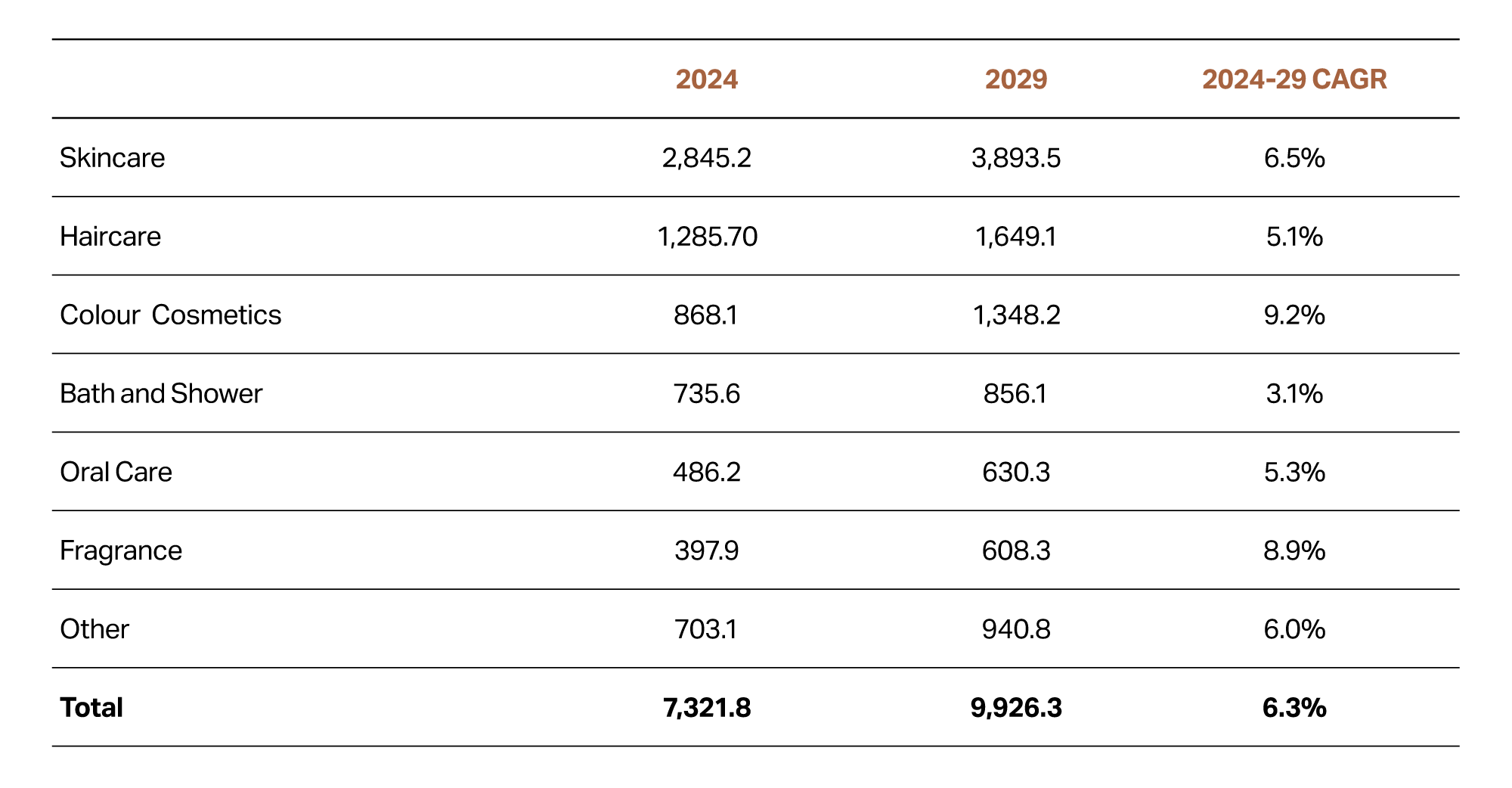
Table 2: Beauty and personal care products sales growth forecast, in USD million (Euromonitor, 2025).
Palm phytonutrients such as tocotrienols, carotenoids, and phytosterols are well positioned to address these evolving needs. These bioactive compounds offer potent antioxidant properties, support skin barrier function, and contribute to anti-ageing and scalp health benefits. As consumers become more ingredient-conscious and receptive to naturally derived actives, palm phytonutrients align strongly with clean beauty, efficacy-driven, and sustainability narratives.
Malaysia has already established a foothold in this segment, shipping approximately RM1.06 million (USD248,000) worth of palm phytonutrients to Thailand in 2025, signalling growing commercialisation and market acceptance. The projected expansion of Thailand’s BPC sector over the next five years is expected to further stimulate demand for these high-value ingredients.
Strategic Pathways for Malaysia in Thailand’s BPC Market
Thailand’s expanding beauty and personal care market presents significant medium- to long-term opportunities for Malaysia’s palm-based downstream industries. While oleochemicals will continue to underpin mass-market formulations through their functional versatility and cost competitiveness, palm phytonutrients offer Malaysia a pathway to move further up the value chain, capturing higher margins and supporting product differentiation.
By leveraging its integrated palm oil ecosystem, strong R&D capabilities, and established sustainability credentials, Malaysia is well positioned to supply both volume-driven oleochemicals and premium phytonutrient ingredients to Thailand’s rapidly evolving beauty and personal care sector. Strategic collaboration with Thai manufacturers, continued innovation, and targeted market positioning will be critical in translating sectoral growth into sustained export expansion—reinforcing palm oil’s role not merely as a commodity, but as a source of advanced, high-value solutions for the regional beauty and wellness industry.